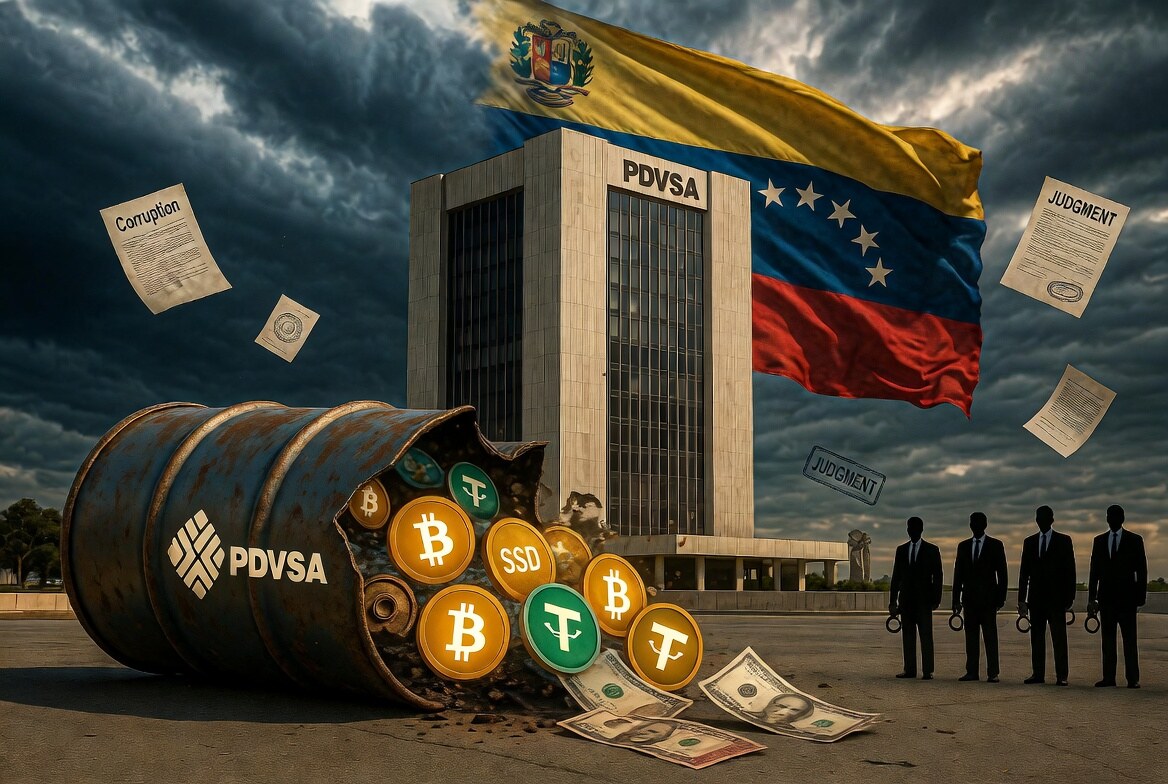
The judicial labyrinth of what is known in Venezuela as the PDVSA-Cripto case begins to take its first formal turns in the courts of Caracas. After three years of secrecy punctuated only by leaks and profound procedural opacity, the activation of this first trial on April 20 marks a turning point in a plot where crude oil and cryptocurrencies mixed to give rise to one of the most complex embezzlements in modern history.
The trial began on the night of Monday, April 20, in the Third Control Court with jurisdiction in cases related to crimes associated with terrorism with national jurisdiction. in charge of Judge Alejandra Romero, in Caracas. The hearing lasted until dawn and was adjourned around 1:10 am on Tuesday, April 21, 2026. The judge rescheduled it for this Wednesday, April 22.
He start The trial would have been characterized by a notable lack of cohesion in the State’s narrative. In a hearing held behind closed doors, far from the expected public transparency, prosecutor Eddy Rodríguez showed signs of insecurity when reading an accusation that set the property damage at 21,000 million dollars, only to be contradicted minutes later by the Attorney General’s Office, which raised the figure to 23,000 million.
The imbalance in official figures occurred in an environment of high tension, with the room guarded by about twenty hooded officials of the General Directorate of Military Counterintelligence (DGCIM) and the Bolivarian National Intelligence Service (SEBIN).
In this scenario, the defense questioned the solidity of the tax file and also formally denounced the plundering of private property at the hands of the same security forces that carried out the arrests. With these elements a new chapter of irregularities opens.
A maze with cryptocurrencies that left unpaid bills
What in 2023 was presented as a televised “crusade” against corruption, with detainees in orange panties in the style of fiction series, today translates into a file where the organization Transparencia Venezuela tries to reconstruct the trace of a national heritage evaporated in the darkness of international sanctions.

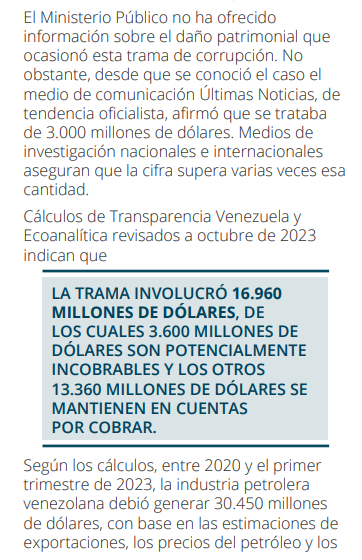
To understand the magnitude of what is being discussed on the stage today, it is necessary analyze the void that this structure left in the public coffers. Between 2020 and 2023, the state-owned Petróleos de Venezuela stopped receiving $16.96 billion, a figure that represents almost 30% of the country’s Gross Domestic Product (GDP) in 2022.
Of that total, some 3.6 billion are considered “uncollectible” because inexperienced intermediaries, but with political connections, disappeared after taking ships loaded with barrels from Venezuelan docks.
The rest remains in a limbo of “accounts receivable” that is equivalent to four times the annual tax collection, evidencing a systemic failure in which oil left the ports, but the money never found its way back to the treasury.
This financial hole was part of an engineering design that took advantage of the State’s urgency to evade the siege of sanctions imposed in 2019. In his first presentations, the attorney general, Tarek William Saab, detailed how the network used cryptocurrency exchanges to mobilize capital outside the banking radar, as reported by CriptoNoticias at the time.
Global platforms such as Kraken were mentioned to convert digital assets, although the mechanism mainly operated under the Anti-Blockade Law, which allowed the use of cryptoassets and “ghost ships” that turned off their radars on the high seas to hide the crude oil route.
The Tether (USDT) stablecoin became the perfect bridge for money to flow to accounts in Hong Kong, Panama or the United Arab Emirates, away from the supervision of traditional regulatory bodies.
The seriousness of these maneuvers led the Prosecutor’s Office to charge crimes that include treason and money laundering. As the investigation revealed, officials such as Antonio Pérez Suárez, then vice president of Commerce of PDVSA, allegedly transferred unpaid invoices for more than 13,000 million dollars directly to the State balance sheet.
The maneuver allowed the accounts to be “closed” in the oil company’s Enterprise Resource Planning (SAP) system. This, hiding the real absence of funds while The capital was managed by newly created briefcase companies which, in many cases, barely delivered half of the supplies (such as trucks of water or food) promised in exchange for oil.
The social cost of embezzlement
As the trial progresses, the list of faces in the dock continues to leave open questions, but none as pointed as that of Tareck El Aissami himself. After years of absolute absence that fueled all kinds of theories, the former Minister of Petroleum reappeared for the beginning of the process in a wheelchair and with an evident deterioration in health, according to reports.
Beyond the judicial resolutions, the dimension of the case is also analyzed from the opportunity cost for public finances. According to the projections of Transparencia Venezuela and the firm Ecoanalítico, the millionaire figure involved in the plot exceeds the estimated financial requirements for the stabilization of critical services in the country.
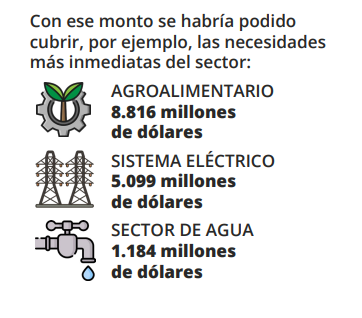
In comparative terms, these funds would have covered the investment necessary for the recovery of the national electrical system and the strengthening of the agri-food sector during an annual cycle, according to the scales of the nation’s immediate needs.
As the work of the courts begins, the process not only faces the challenge of determining criminal responsibilities, but also of managing the contrast between the value of the seized assets, which include real estate developments and high-end goods, and the investment deficit in basic infrastructure that the State is still seeking to solve.