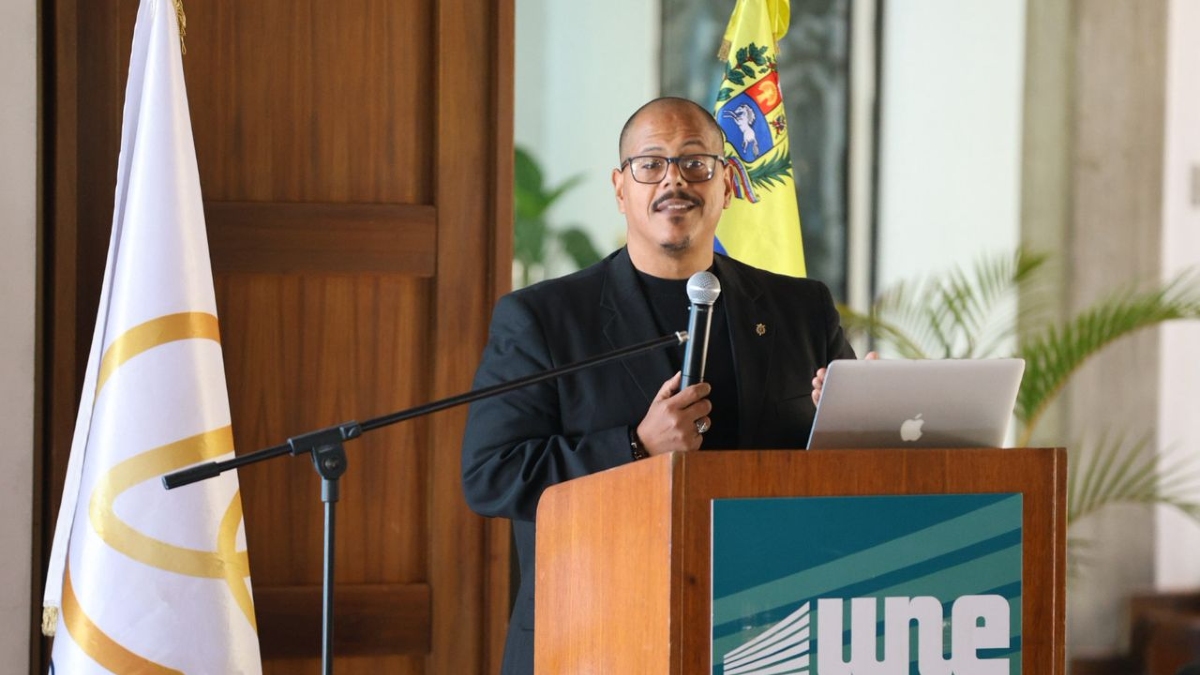
The dynamics of the cryptocurrency market in Venezuela and its relationship with the exchange gap is going through a new chapter in its controversial history. Now, with the announcement of license 57 issued by the Office of Foreign Assets Control (OFAC).
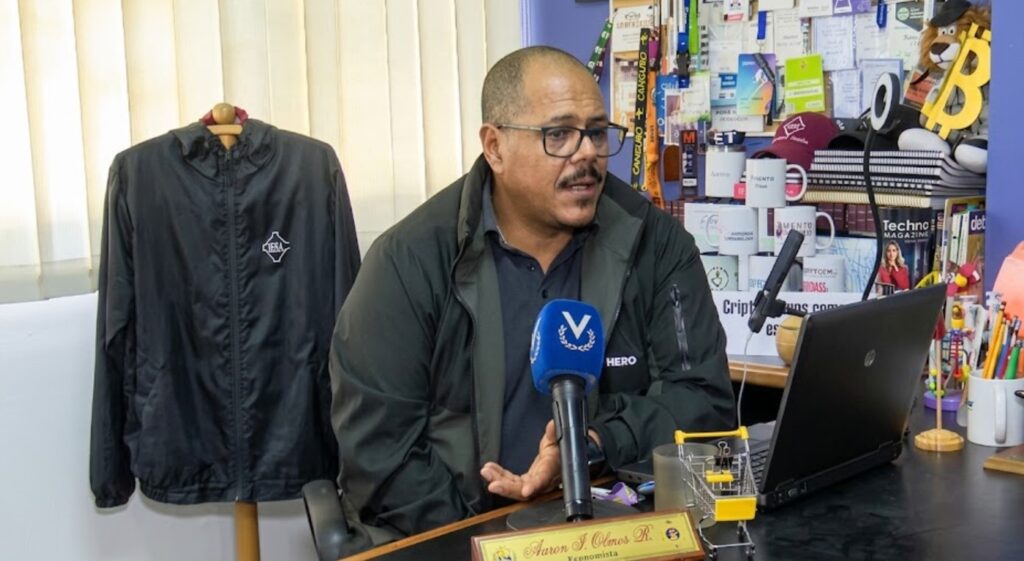
According to the Venezuelan economist Aarón Olmos, as a result of this measure, it is foreseeable that the price of the stablecoin USD Tether (USDT) in Venezuela will remain downward, causing a decrease in the exchange gap with respect to the official dollar arbitrated by the Central Bank of Venezuela (BCV).
As you see it, a reaction like the one in the first quarter—in which the digital currency maintained erratic behavior—is likely. be repeated now.
“It would not be strange to see an effect similar to that of the first quarter, where the unofficial exchange rate was very close to the official one of the BCV due to the expectation of the arrival of foreign currency,” he explained in an interview with CriptoNoticias this Wednesday, April 15. “It is foreseeable that the exchange gap—which exceeds 30% between the BCV dollar and the USDT—will close,” he commented.
The license is positive, but it is revocable
However, Olmos clarifies that The sustainability of a smaller exchange rate gap depends on structural stability. He thus recalled that, although in the first quarter of 2026 the USDT fell, the official dollar arbitrated by the BCV rose in price (by more than 50%), which caused a rebound effect in product prices.
The analyst emphasized that, despite the flexibility, market stability is not guaranteedsince, in his vision, license 57 is fragile and depends on geopolitics. “In principle, the license is perceived as something positive, but it is revocable,” said the specialist.
“The licenses are grantable, withdrawable and are tied to political schedules,” he emphasized. Furthermore, he pointed out an important structural limitation: The measure only covers three public banks. “Large banks like Banesco or Mercantil are not there. As long as there is no complete clarity in traditional channels, cryptocurrencies will continue to be the alternative,” Olmos pointed out.
Indeed, OFAC General License No. 57 establishes flexibilities for the operations of the BCV and three other public banks: Banco de Venezuela, Banco Digital de los Trabajadores and Banco del Tesoro.
Another factor that could offset the effect of the license is internal liquidity. The announcement of possible “responsible” salary adjustments for next May 1 (Labor Day) generates what Olmos defines as a “price effect.”
That is, although there is a greater supply of foreign currency through legal means, the pressure of more bolivars in circulation could push prices upward, maintaining the need for protection in digital assets.
USDT adoption in Venezuela will not stop with the flexibilities
Regarding adoption, the university professor also considers that the use of the USDT digital currency has reached a level of maturity difficult to reverse in the retail sector.
“On a personal level, individuals are not going to stop using USDT. Venezuelans have already learned to use it for remittances, payments and safekeeping because not everyone has access to international banking,” said Olmos.
And although he clarified that the few corporations that adapted to USDT could migrate back to traditional banking due to accounting facilities, he explained that the digital asset infrastructure already installed in the country It offers cost and speed advantages that conventional banking does not yet match.
Furthermore, he emphasized that, as long as there is not complete clarity in traditional channels, “crypto assets will continue to be the alternative.”
“It is notable that, in all these years, there has been no document or sanction that prohibits Venezuela from using cryptocurrencies to solve its problems,” he stressed.
A relief for the financial system and the exchange gap
Venezuelan economist and business consultant Asdrúbal Oliveros agrees with Olmos’ vision. For him, This action is a fundamental step for the macroeconomic health of Venezuela.
In statements to a local station this Wednesday collected by CriptoNoticias, the analyst highlighted that license 57 is the most important measure after relaxations of oil sanctions, since it allows the BCV to recover its management capacity.
“This flexibility should give depth and improve the currency allocation mechanism,” said Oliveros, adding that “it is a necessary step to reduce the exchange gap and, with it, reduce the inflation rate.”
According to official BCV data cited by the consultant, Venezuela closed March with an annual inflation of 650%. A level that, in his opinion, requires urgent measures to stabilize purchasing power.
For this reason, reducing the gap between the official exchange rate and the digital asset market is, in Oliveros’ opinion, the primary objective.
“In my opinion, more than the devaluation rate itself, the most serious thing is the gap. The most important objective is the reduction of the gap, more than the currency depreciation rate itself,” he said.
So, if the measure announced by OFAC begins to materialize soon, the reduction of the exchange rate differential could be a reality, bringing relief to the Venezuelan economy and the pockets of citizens. But, again, its sustainability will depend, as Olmos says, on the license not being revoked for geopolitical reasons. The tutelage is still present.