16 April 2026
The Government of India has paved the way for quota for women by making radical changes in the seats of Parliament.
Prime Minister Narendra Modi’s government is introducing important bills during the three-day special session of Parliament starting today, which could reshape India’s electoral landscape.
The legislative package includes three amendment bills, which the Bharatiya Janata Party (BJP)-led government says are aimed at paving the way for the implementation of the 2023 law guaranteeing a 33% quota for women in the national Parliament and state legislatures by the 2029 general elections.
Here’s what the three proposed bills include:
- The Constitution (One Hundred and Thirty-First Amendment) Bill, 2026 proposes to increase the number of seats in the Lok Sabha, the lower house of Parliament, from 543 to approximately 850, including 815 members from states and 35 members from Union Territories.
- The Delimitation Bill, 2026 establishes a Delimitation Commission which is tasked with making changes in seat allocation in Parliament and State Assemblies based on the latest population census and redrawing constituency boundaries accordingly. Currently, the 1971 census defines the composition of the Lok Sabha. The 84th Amendment Act of 2001 sealed the constituency boundaries until the first census after 2026.
- The Union Territory Laws (Amendment) Bill, 2026 works in tandem with the first two Bills to expand one-third reservation for women in the assemblies of Union Territories including Delhi, Jammu and Kashmir and Puducherry.
The constitutional amendment requires a special two-thirds majority to be passed in Parliament, while the other two bills will require only a simple majority.
https://p.dw.com/p/5CG5D
16 April 2026
Putin will visit India for BRICS summit later this year
Russian President Vladimir Putin will be in India later this year to attend the next BRICS summit, Russian state-owned TASS news agency reported on Wednesday.
Putin will “definitely” attend the summit in person, the report said, citing Kremlin spokesman Dmitry Peskov.
No official dates have been announced, but TASS previously cited an Indian government source as saying that the summit is planned to be held on September 12–13.
In December, Putin was on a two-day visit to India, where BOther countries signed several agreements on migration, labor mobility, port access, shipping, and health and food safety areas.
https://p.dw.com/p/5CFtb
India’s aviation sector is in turmoil amid Iran war
From longer routes to higher fares, the Middle East conflict is exposing the weaknesses of India’s fast-growing airline sector.
Read more here
https://p.dw.com/p/5CFqd
16 April 2026
Iran has created a fertilizer crisis for India’s farmers.
India’s small-scale farmers are facing fertilizer shortage due to the Iran war and closure of the Strait of Hormuz.
What impact could a delay in delivery have on farmers and their livelihoods?
https://p.dw.com/p/5CFqf
16 April 2026
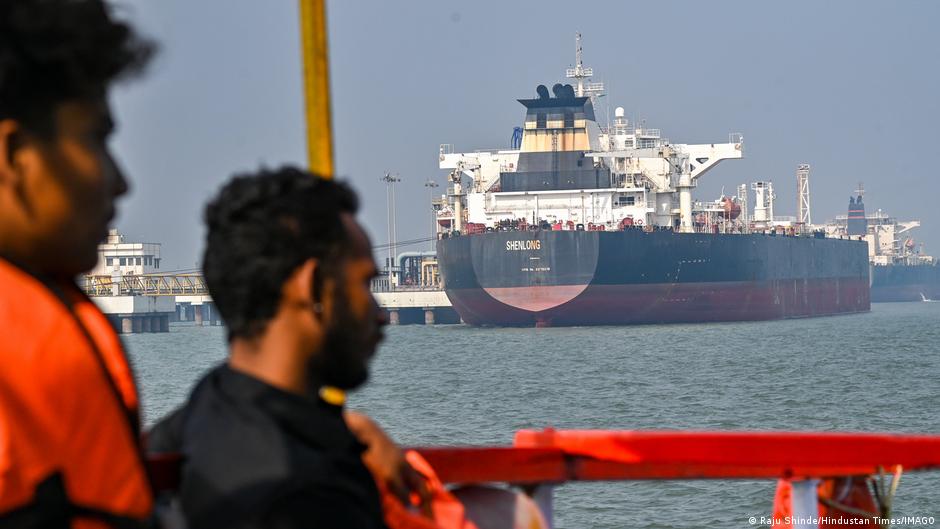
US will not renew waiver allowing India to buy Russian, Iranian oil
India’s energy supplies are likely to be hit after the United States announced on Wednesday that it would not renew sanctions waivers that allow limited purchases of Iranian and Russian oil.
US Treasury Secretary Scott Besant said the decision included a 30-day waiver on Iranian oil shipments at sea that expired this week and a similar waiver on Russian oil that expired over the weekend.
“We will not renew the general license on Russian oil, and we will not renew the general license on Iranian oil,” Besant told reporters at the White House.
The move signals an end to the Trump administration’s use of waivers to boost global oil supply and ease high energy prices.
According to Besant, in March, India was given a 30-day grace period to buy Russian oil, in an effort to “enable the continued flow of oil into the global market”.
US tariffs on India were eased under a trade deal in February after India agreed to curb Russian oil purchases.
Earlier this month, India imported Iranian oil for the first time since 2019 after the US lifted sanctions on the purchase of Iranian crude.
India is the world’s fourth largest economy and third largest importer and consumer of oil. According to India’s Petroleum Ministry, India imports crude oil from more than 40 countries.
https://p.dw.com/p/5CFtX
Welcome to our coverage
hello! I’m Shakeel and Dharvi from DW’s New Delhi studios, bringing you the latest updates from across India.
On Wednesday, US Treasury Secretary Scott Besant announced that the US would not renew waivers that allow it to buy some Iranian and Russian oil without facing US sanctions. This will have a direct impact on India.
Meanwhile, Russian President Vladimir Putin will be in India to attend the upcoming BRICS summit.
Across the border, Pakistan earned praise from the US State Department for calling India’s neighbor an “unreliable mediator”. This comes as Indian opposition leaders have accused Prime Minister Narendra Modi of “ruining” India’s foreign policy.
For all this and more, stay tuned as we bring you all the major developments from across the country.
https://p.dw.com/p/5CFqa