In the past few days, Spanish airline Iberia has resumed landing in Caracas, and American Airlines has also announced plans to return to Venezuela.
Paraguay, meanwhile, is rallying support to reverse the suspension of Venezuela’s membership in Mercosur, the South American trade bloc. “This is one of the initiatives that we would like to pursue during the temporary presidency of Paraguay,” Marco Riquelme, Paraguay’s new Minister of Industry and Commerce, said at a press conference in late March.
Should the initiative succeed, it would also have implications for the EU, which recently signed a comprehensive free trade agreement with Mercosur, which is due to come into force on a provisional basis on May 1.
Less than four months after the US ousted then-President Nicolas Maduro from power in a controversial military operation, Venezuela’s economic situation has changed dramatically.
Oil industry a decisive factor
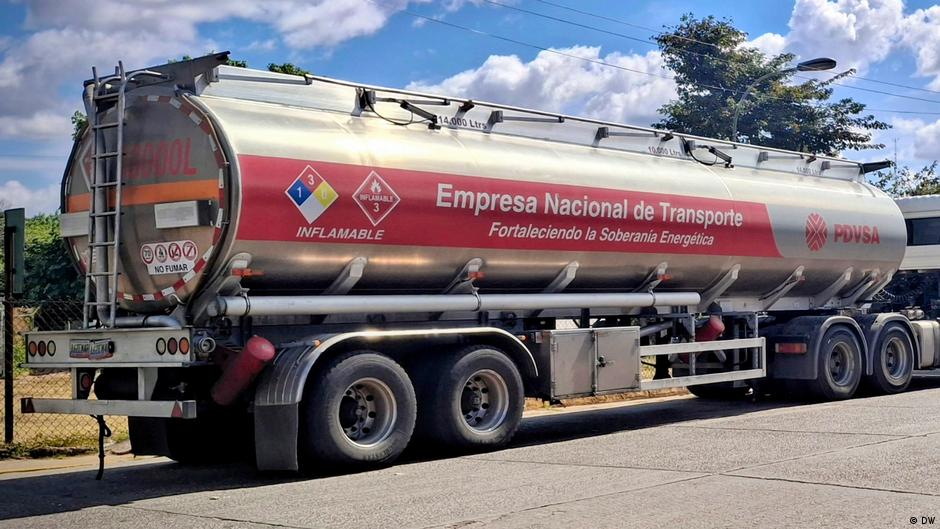
Venezuela is the world’s most oil-rich country based on proven oil reserves. Reviving its oil industry is therefore crucial to helping the economy get back on its feet after years of severe sanctions imposed by the US, EU and others.
Long lines in front of gas stations have now become shorter, or have disappeared altogether. Venezuela recently reported that its monthly crude oil exports exceeded an average of 1.1 million barrels per day (bpd) in March for the first time since September.
In 2024, the country’s production was projected to reach slightly more than 893,000 bpd. The fact that Venezuela increased its production is contrary to the global trend, according to the Organization of the Petroleum Exporting Countries (OPEC), which saw crude oil production fall by 27% in March due to the US-Israeli war with Iran.
Oil companies are doubling their efforts
This trend is expected to continue in Venezuela. Spanish energy group Repsol has just announced that it plans to restart operations in Venezuela soon. No further details were released following a meeting between Repsol executives and acting president Delsey Rodriguez.
On Monday, US oil company Chevron announced that it is ready to expand oil extraction operations. After meeting with corporate executives, Rodríguez said the arrangement “will allow us to make significant progress in production. And the revenues generated from that production will go directly for the benefit of the Venezuelan people, and it will be a shared benefit, which will be good for the United States and the Venezuelan people.”
Specifically, two major deals that Chevron signed with Venezuelan state-owned oil company PDVSA involved an asset swap that left the U.S. company with about half of the total stake in the joint venture Petroindependência, while also adding the right to develop a new oil field in the Orinoco Belt, Venezuela’s vast oil-producing region.
lack of transparency
However, Ronald Balza, head of the Faculty of Economics and Social Sciences at Andrés Bello Catholic University (UCAB) in Caracas, cautioned that it is almost impossible for outsiders to monitor transactions in the oil industry. He told DW that recent developments are difficult to assess because the US has not yet provided transparent or regular payments for the oil supplied by Venezuela.
That’s why it is so difficult “to develop forecasts in terms of prices, employment and the allocation of public funds, or any other normal government activities,” Balza explained.
The current executive government under Rodriguez has not been legitimized in the democratic process. In an interview with Madrid-based media platform The Objective, renowned Venezuelan economist and Harvard professor Ricardo Hausmann also spoke of dictatorship.
“If [US President Donald] Trump says he controls Venezuela, must guarantee freedom, security and rights [prominent political figure] Maria Corina Machado. “His absence from the country shows that dictatorship continues,” he said.
Politician and human rights campaigner Machado was awarded the 2025 Nobel Peace Prize, which he gifted to Trump as “a token of gratitude on behalf of the Venezuelan people.” She has been living in exile in Venezuela due to security concerns since the last disputed elections.
Propaganda from Africa
But even though she is not in the country, she is still actively campaigning for her political viewpoint.
“Under our government, Venezuela is going completely privatized,” he recently told top energy executives at the annual CERAWeek energy conference in Houston. “For the first time in Venezuelan history, the state will get out of your way, and pave the way, by focusing on what it should do: setting clear rules, enforcing contracts, and guaranteeing long-term certainty for your investments.”
Currently, interim President Rodriguez is in charge of Venezuela. She is attracting US investors and capital, and in late March also joined an international investment forum to woo foreign financiers. Her appearance would have been unimaginable till a few months ago. But Rodriguez is removing state regulations to attract more private investment.
An opportunity for European businesses?
In light of several recent changes to the Venezuelan economy, local media are speculating whether the German multinational Siemens will be involved in the reconstruction of Venezuela’s electricity infrastructure.
“Economic growth depends on a stable electricity grid,” Paul Marquez, head of the Zulia state chapter of the Venezuelan Federation of Chambers of Commerce and Production (Fedecmarus), Venezuela’s main business association, told financial news portal Banca y Negocios. “Without electricity it will not be possible to increase oil production.”
He also said that Siemens is working on proposals for the authorities.
Contacted by DW, Siemens neither confirmed nor denied the information. “We are in close contact with our local team and are actively assessing all potential impacts on our operations. We will closely monitor developments and assess how they impact our business,” a Siemens spokesperson told DW.
“While instability continues, our focus remains on ensuring the safety of our employees,” he said.
For now, that seems to be the main theme of Venezuela’s current situation: caught somewhere between readiness and uncertainty about the future.
This article was originally published in German.