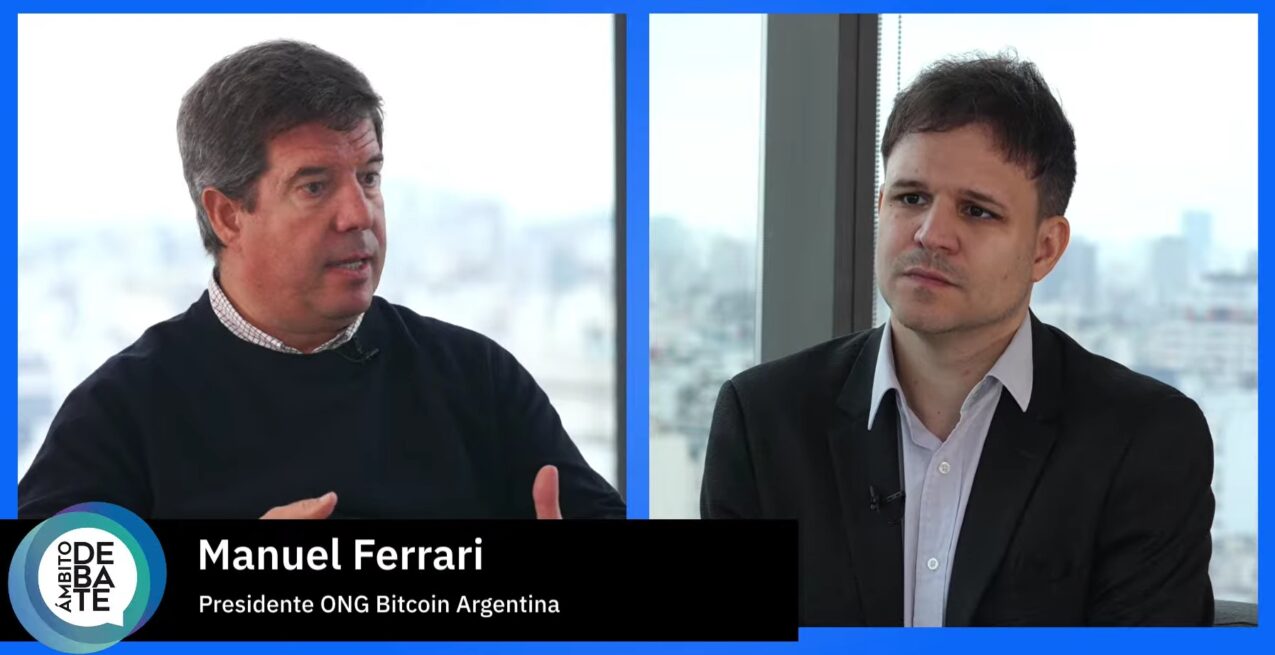
Ferrari pointed out that this is the year of stablecoins globally, driven by the US.
He highlighted the institutional adoption of Bitcoin led by spot ETFs and the entry of Wall Street.
Manuel Ferrari, president of Bitcoin Argentina, analyzed the present and future of the BTC and cryptocurrency ecosystem with a focus on the growing role of stablecoins and the sustained advancement of bitcoin as a store of value asset.
Ferrari was clear define the current market moment: “This is the year of stablecoins globally.” In his words, the United States is advancing a strategy to use these stablecoins as a Treasury debt distribution platform.
At the moment there are more than $300 billion in stablecoins, mainly Tether, and the goal is to reach $3 trillion, as noted by Treasury Secretary-designate Scott Bessent.
The phenomenon is already observed in Europe, Brazil and Argentina, in the latter peso stablecoins are already traded. “Governments are realizing that this way of placing debt is great,” said Ferrari, who anticipated greater proximity between authorities and this technology.
The phenomenon of stablecoins has been reviewed by CriptoNoticias. In fact, a report from Visa and Dune states that currently stablecoins in local currencies (other than the dollar) are growing at a rate three times faster than the North American currency.
In parallel, the Bitcoin Argentina reference specifically referred to the behavior of Bitcoin. “It continues to grow at constant levels and I don’t know anyone who regrets it. Someone who has had it as an investment for a while and understands, no one says ‘I’d better sell everything and buy American Treasury Bonds,'” he compared.
For Ferrari, the most relevant in recent years has been the institutional adoption. He cited the launch of the Spot Bitcoin ETF, which he called the most successful in history, and the Trump administration’s favorable stance toward the industry.
“Wall Street got involved and smart money in Bitcoin and that is what changed in the last two years,” he stated. The leader also explained that the price of Bitcoin will be defined by its adoption as a long-term store of value, a process that he described as gradual.
In addition, he acknowledged that daily penetration remains low. He admitted that, in his classes, less than one in ten students owns bitcoin and its daily use is even more sporadic. However, he insisted that the asset is in the full phase of “price discovery” or price discovery.
These statements were made within the framework of the fourth panel of Ámbito Debate on Finance and Investments, moderated by Juan Pablo Marino, Economy and Finance editor of Ámbito.
Ferrari stressed that Bitcoin has its own regulation: “it is written in code” and, therefore, it is immune to discretionary decisions by governments or regulators.
Bitcoin Argentina, the non-profit civil association with more than 300 members, promotes education about this technology, especially in countries with histories of monetary instability such as Argentina. They offer their own diplomas and courses with lawyers and tax experts, with the aim of explaining how money works and the benefits of crypto innovation.
Ferrari presented a panorama of maturation of the sector, that is, greater government proximity to stablecoins, institutional consolidation of Bitcoin and a sustained conviction among those who already invest in the asset. His intervention reflected both enthusiasm for current growth and caution about the timing of mass adoption.