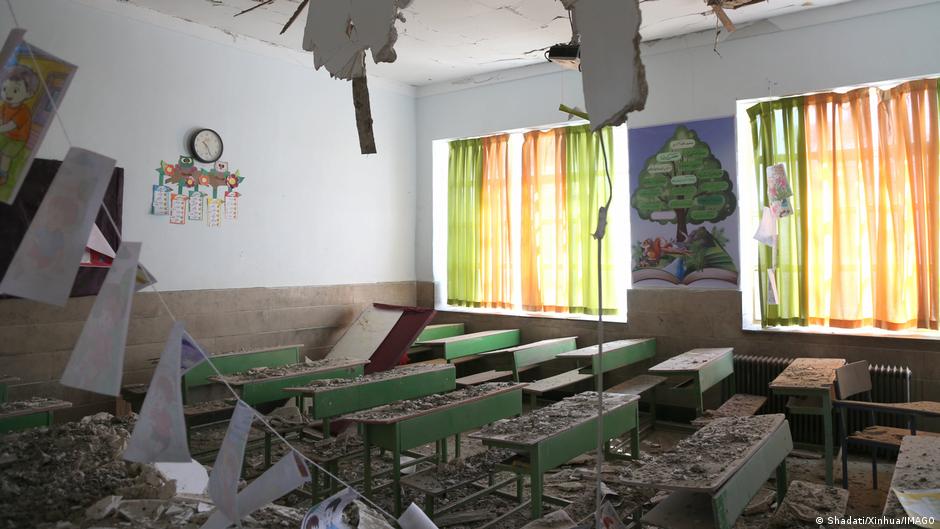
Iran’s Education Ministry announced last week, “Until further notice, there will be no in-person classes in schools across the country.” From April 21, classes will be held online through a dedicated platform and the state-run television program “Iran TV School”. This change affects all types of schools and all grades in the country. This will remain effective until further notice.
Iran is currently in a dilemma over the possible resumption of air strikes. The situation remains tense after a fragile ceasefire following six weeks of attacks.
More than 640 educational buildings in 17 provinces have been damaged during the US and Israeli attacks, according to the head of the School Renovation, Development and Equipment Organization. About 250 of them are seriously damaged and need to be completely renovated; At least 15 schools are considered beyond repair and will have to be rebuilt.
Switching to National Intranet
netblocksA global internet monitor based in London reported that by April 21, the longest nationwide internet outage ever recorded was documented. The country is largely cut off from the global internet.
Most Internet traffic now runs through the national intranet, which is highly restricted and allows access only to domestic websites. Even before the blackout, Iran’s Internet access was strictly censored. Many social media platforms were blocked, forcing many users to rely on VPN software to bypass restrictions.
“The Internet blockade in Iran will likely never be completely lifted,” says Amir Rashidi, a cybersecurity expert and director of the Mian Group, a US-based organization that advocates for human rights, digital freedom and social justice in Iran and the Middle East and North Africa (MENA) region.
He added, “The idea that Iranian authorities have been working on for a long time is a kind of intranet that is completely separate from the global Internet. It is about broader state control in the digital sphere.”
In this way, authorities can prevent people from communicating with each other, organizing protests, or sharing photos of demonstrations. Also, some digital services can still be used through the intranet, including food-delivery apps or ride-sharing services.
Extra burden on school children in deprived areas
However, switching to virtual lessons through intranets is a major challenge, especially for schoolchildren from disadvantaged families and poor areas of the country.
“We have already implemented virtual learning to some extent during the COVID-19 pandemic, using apps and platforms that operate on the national internet,” Rashidi explains. “The problem is that in some areas, such as Sistan and Baluchistan, there is hardly any internet connection because they lack the necessary infrastructure. Most people in Iran access the internet through their cell phones. However, there are fewer smartphones in these areas and fewer devices such as laptops for schoolchildren.”
During the COVID-19 pandemic, organizations in Iran and abroad ran fundraising campaigns to collect money or provide second-hand equipment to those in need.
But according to activists, local support has declined significantly due to rising unemployment, economic hardship and inflation since the war began.
Due to lack of internet access in some parts of the country, some classes have to be transferred to the state television program “Iran TV School”. For example, according to Iran’s semi-official Fars News Agency, mathematics lessons for seventh, eighth, and ninth grade students will be televised at 2:00 p.m., followed by physics lessons for twelfth grade students at 6:00 p.m.
There are ongoing discussions in Parliament on rapidly expanding the national information network, increasing bandwidth for educational institutions and developing standardized learning materials.
Alireza Manadi Sefidan, chair of the parliamentary committee on education and research, has called for additional investment to improve conditions for distance learning in both schools and universities nationwide.
Meanwhile, the national intranet is increasingly becoming the structural backbone of public life. Also, with Internet access restricted, large sections of the population find themselves cut off from the outside world.
This article was originally published in German.