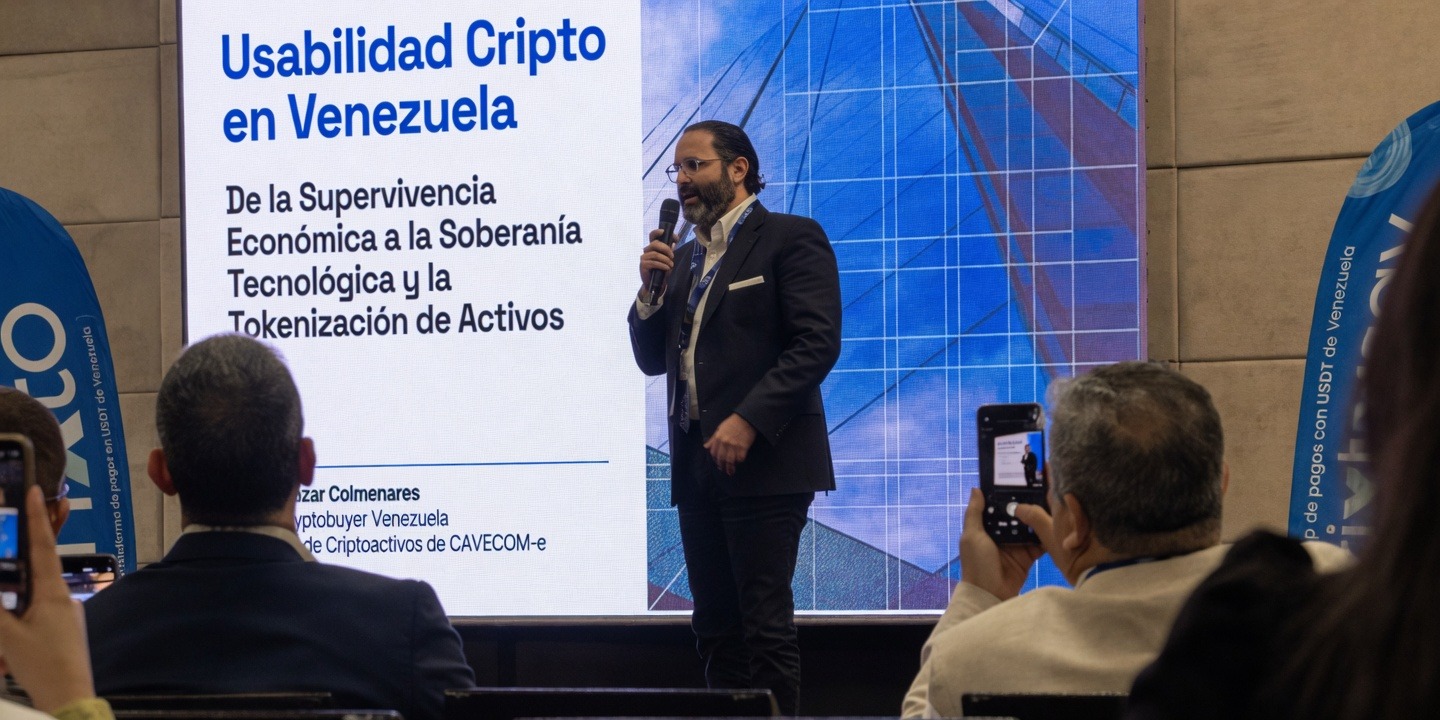
Venezuela evolves from economic survival to a formal model of technological sovereignty.
For Colmenares, the OFAC flexibility opens bridges between the bolivar, the dollar and digital assets.
Venezuela is trying to move from a survival ecosystem to a global study model, although the path is marked by regulatory uncertainty. For years, the country has navigated a financial limbo where necessity forced millions of people to jump from the bolivar to the dollar, and from there to digital assets such as bitcoin (BTC) and USDT (Tether).
Today, this spontaneous dynamic seeks to be formalized under what Eleazar Colmenares, director of Crypto Assets at the Venezuelan Chamber of Electronic Commerce (CAVECOM-e), calls exclusively for CriptoNoticias as a “hybrid economy.” It is about a scheme where traditional banking and the cryptocurrency sector coexisttrying to overcome the disconnection that, for a decade, isolated Venezuelan capital.
This transition received a boost after the easing of sanctions by the United States Office of Foreign Assets Control (OFAC). By opening temporary legal windows towards the Central Bank of Venezuela, a space for maneuver is generated that the Chamber itself tries to structure.
However, the strategy of converting this operation into an exportable model depends directly on the stability of these licenses policies, the validity of which is usually subject to the volatility of the geopolitical agenda between Caracas and Washington.
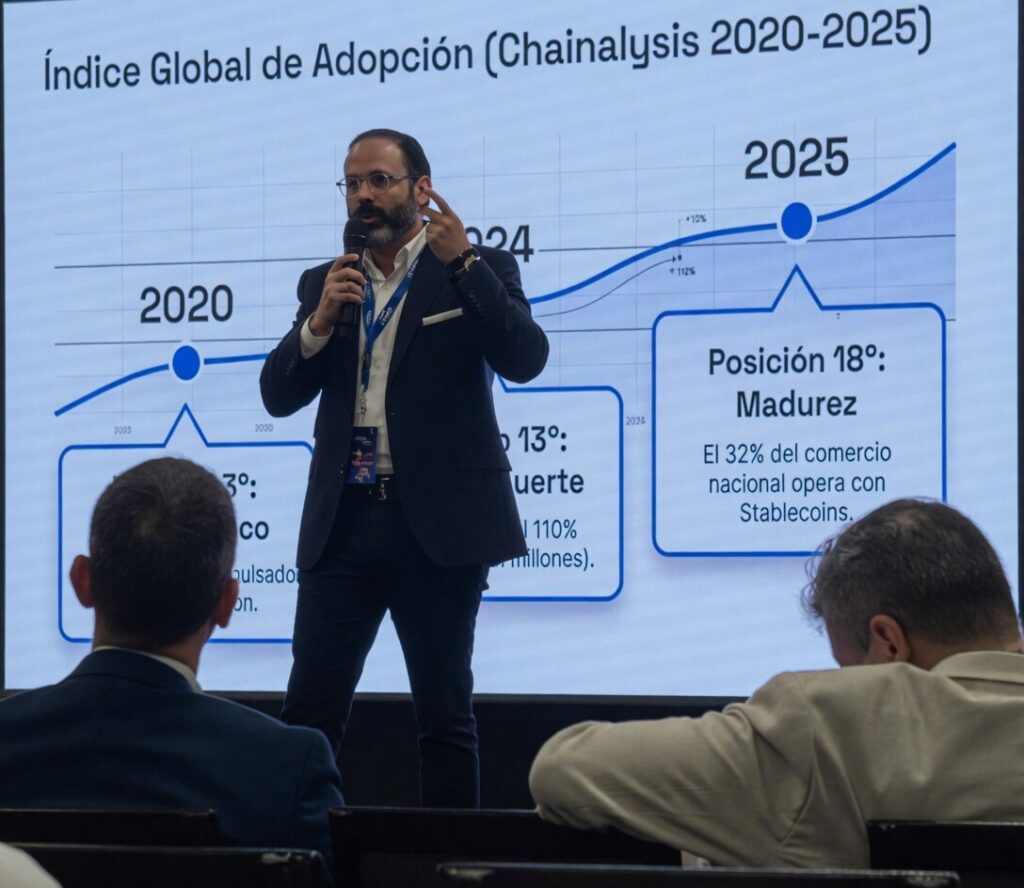
Colmenares maintains that the creation of this formal architecture responds to an adoption of cryptocurrencies that the data has already reflected for years. According to the Chainalysis index, Venezuela ranked third in the world in 2020. In the 2025 index it ranked 18th globally, but rose to ninth place when adjusted for population.
Chainalysis modified its methodology in 2025 by removing the retail decentralized finance (DeFi) subindex and adding institutional activity, which explains part of the fluctuations in the ranking. Venezuela remains among the leading countries in Latin America in adoption per capita, a fact that CriptoNoticias has consistently reported.
Faced with this scenario, for the private sector, the challenge is no longer to promote use, but to integrate an activity that was born in informality within the balance sheets of companies.
Without a doubt, the recent announcement of the easing of sanctions by OFAC towards the Central Bank of Venezuela could open the door to legal bridges between the bolivar, the dollar and digital assets, facilitating tokenization projects for minerals or agro-industrial products that can attract foreign investment without the risk of secondary sanctions.
Eleazar Colmenares.
The impact of April 14 for the cryptocurrency sector
This institutional turn is supported by recent regulatory milestones that act on two complementary fronts: assets and financial infrastructure. On the one hand, General License No. 51, issued on March 6, opened the door to the legal commercialization of gold and minerals; on the other, the relaxation of sanctions The Central Bank of Venezuela on April 14, 2026 enabled the banking bridges necessary to settle these exchanges.
Three weeks before this latest announcement, CAVECOM-e had already formalized its Crypto Technical Table under regulatory approval, anticipating the need to standardize processes so that the use of digital assets transcends mere economic survival and consolidates itself as a tool of technological sovereignty, as Colmenares highlights.
The Technical Board is not a commercial entity, but rather an institutional hinge. Our mission with these ten committees is to resolve the critical issues that have held back integration: from secure custody to transparent liquidation. We are designing the technical scaffolding so that the traditional financial system and the crypto ecosystem speak the same language in favor of national development.
Eleazar Colmenares.
This collegiate body, made up of experienced specialists, has the mission of generating technical proposals that articulate the traditional financial sector, the capital market and the crypto ecosystem. To encompass the complexity of this new model, the Technical Board has been structured into ten specialized committees:
- Regulatory and Compliance: Legal and Regulatory; Cybersecurity, Computer Crimes and Prevention of Money Laundering.
- Management and Operations: Accounting and Tax; Finance; Technology.
- New Markets: Asset Tokenization; Digital Mining; Foreign Trade; New Business Models.
Towards a new financial model
As Colmenares explained, the objective of this division is to design concerted projects that allow the “hybrid economy” to stop being a theory and become an operational reality for Venezuelan companies.
“These are not isolated initiatives, but rather a technical mechanism so that formal capital can flow into the code safely,” the manager highlighted.
However, the practical implementation of this hybrid economy faces critical technical obstacles such as secure custody of assets, transparent settlement and, fundamentally, compliance with international standards against money laundering.
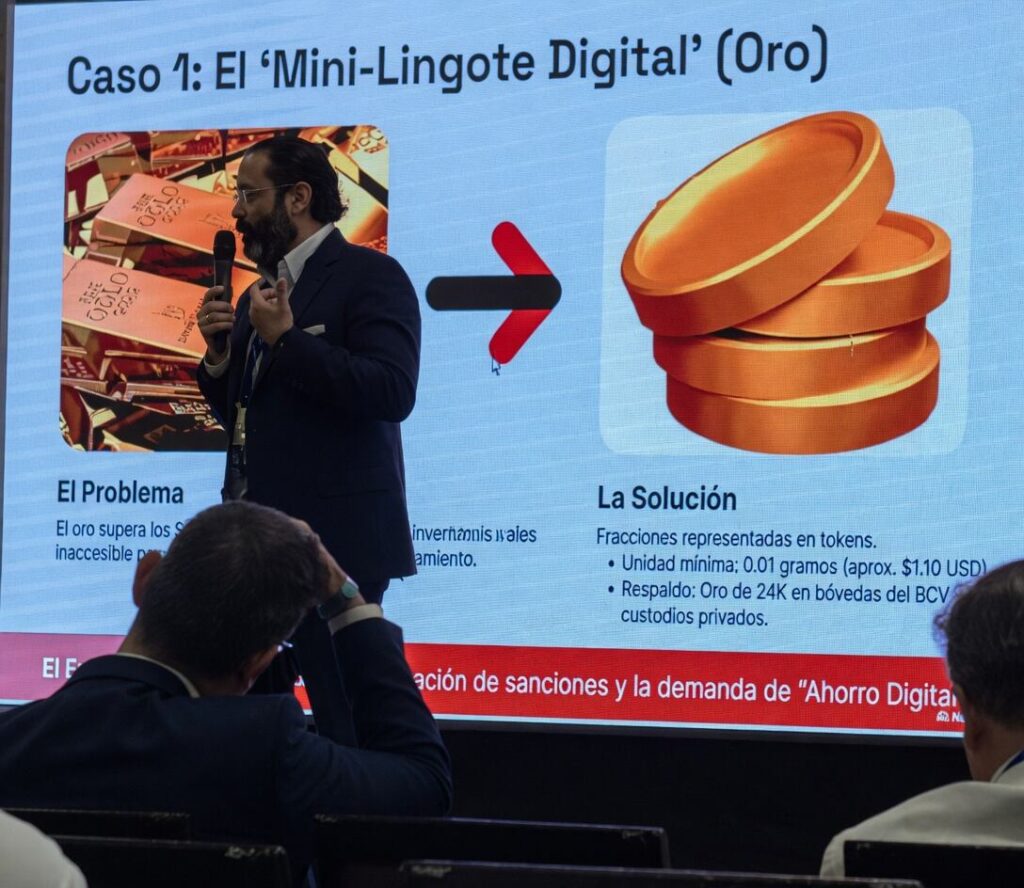
Although Colmenares proposes projects for the tokenization of gold, minerals and agro-industrial products, these remain for now in a conceptual development phase. The objective is to allow underground wealth to be traded globally without the friction of the traditional correspondent banking system, although tokenization still requires a robust legal framework.
The success of this financial methodology will depend on whether the resilience demonstrated by The Venezuelan user manages to fit into the gears of a formal system.
While the OFAC window remains open, the Technical Board has the task of building an accounting and technical infrastructure that demonstrates that the hybrid economy proposed by Colmenares is more than a response to the crisis and that it is rather a structure capable of surviving the uncertainty of the global environment.