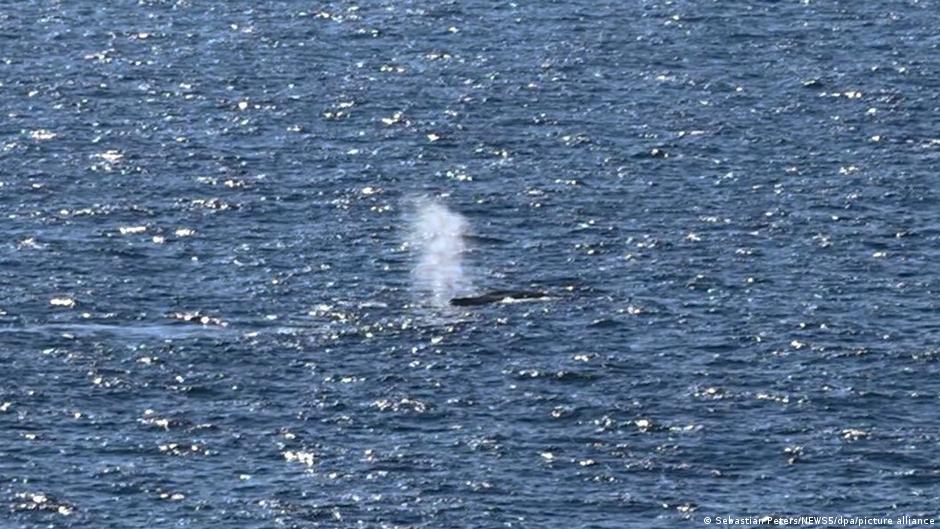
The whale nicknamed Timmy, whose fate has fascinated Germany since the end of March, was released into the waters of the North Sea on Saturday morning.
Timmy reportedly swam out of the special transport vessel filled with water under his own power.
The young animal survived the day-long journey from the German coast of the Baltic Sea. The 12-metre (about 40-foot) marine mammal was moved closer to sea after previous attempts to help it swim away ended with the animal being restrained and in increasing distress.
Activists hope Timmy will continue his journey toward the Atlantic Ocean. AFP news agency quoted a member of the rescue team as saying that the animal was moving in the right direction, at least initially.
But despite reaching the salty, cold waters of northern Europe, the whale’s life is in danger after its health deteriorated while stranded.
Does Timmy want to sink or swim?
Earlier this week, marine biologist Fabian Ritter told DW that rescuers needed to make sure Timmy could handle deep water before releasing him.
“Look, a whale that remains motionless for several weeks, lying on land, will suffer from muscle stiffness (…) it will not be in an immediate state of swimming, just actively, getting out of the barge and being free and happy,” he said.
“If you have small whales that were lying on land (…) and you swim them back up and put them back into deeper water, you need to support them for a period of time, to make sure they can move naturally and actually swim. If you don’t do that, they sink to the ground and suffocate. So that’s a real danger,” he warned.
Some environmental and animal rights activists criticized the trip to the North Sea, arguing that the whales had traveled too far and that transportation would cause them additional stress.
German authorities had refused to save the animal in early April, later approving the latest rescue plan after public pressure. The effort was funded by two wealthy entrepreneurs.
Timmy’s release location is approximately 70 kilometers (43.5 mi) off the coast of Denmark. Commenting on the possibility of whales becoming stranded on its shores, the Danish Environment Ministry said it was not planning any rescue efforts, noting that beaching is an “entirely natural phenomenon” and that Wales “cannot be protected from disturbance by human intervention.”
Edited by: Louis Olofse