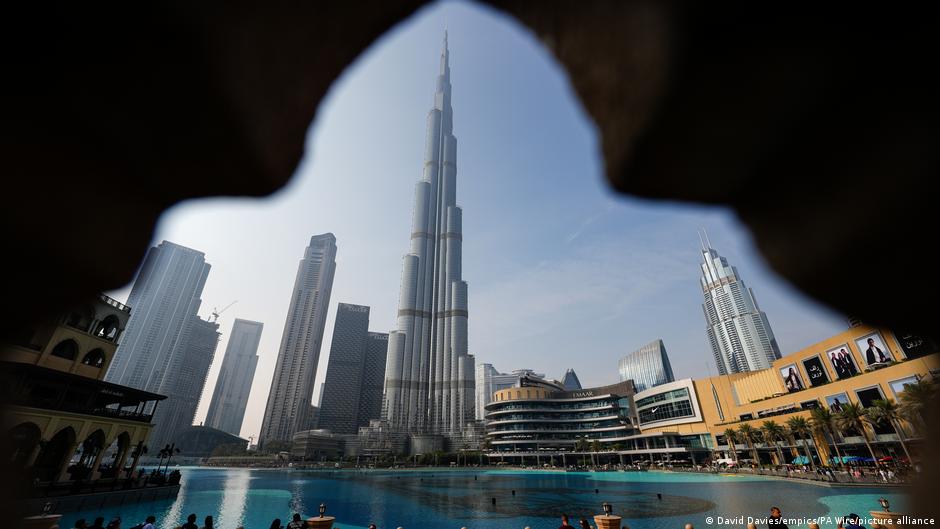
Dubai has built a reputation as an oasis of stability in the volatile Middle East region.
The second richest emirate of the UAE has established itself as a safe financial center where high-net-worth individuals can deploy capital, run businesses and plan for the long term with confidence.
However, that carefully constructed image has been shattered by the Iran War.
Iranian missile and drone attacks on Gulf targets caused a sharp economic shock, and the stock markets of Dubai and neighboring Abu Dhabi experienced sharp declines in the early stages of the conflict.
At the same time, tourism declined and hotel occupancy fell to 20% from the usual 70 to 80%, and flights to and from Dubai International Airport dropped by nearly two-thirds, according to London-based research firm Capital Economics.
While air traffic, tourism and business arrivals are improving, the longer the standoff between Washington and Tehran lasts, the greater the threat to Dubai’s reputation as a global business hub.
Safe haven status is on hold
Some high net worth individuals, who adopted Dubai as a playground for the rich and famous, have questioned whether it is really the safe haven it promised. Many have turned to two other major financial centers – Singapore and Switzerland – to park at least some of their assets.
Wealth advisers in both countries have recently reported a sharp increase in inquiries from Dubai-based clients, with Swiss private bankers expecting tens of billions of dollars in new inflows from the Gulf.
But rather than being competitors, the two centers attract different types of money, says Ryan Lin, a Singapore-based lawyer and director of Bayfront Law.
“Switzerland attracts European and global clients, while Singapore is more likely to benefit from Asian-origin assets,” Lin told DW.
Singapore pioneered the model that Dubai later emulated, creating a sophisticated ecosystem of family offices – private firms set up to manage investments, tax and estate planning. These solutions are particularly attractive to households in countries such as China, India and Indonesia.
Meanwhile, Switzerland relies on its long tradition of private banking and its reputation for neutrality. For those looking to sell some of their assets from Dubai, the move is often “a choice between growth and conservation”, said Til Christian Budelmann, chief investment officer at Swiss private bank Burgos.
“Singapore is excellent for achieving Asian growth, but Switzerland remains the world’s leading anchor for capital preservation,” Budelmann told DW.
Real estate boom cools down
Beyond the immediate downturn, the conflict threatens Dubai’s long-term appeal to expatriates and businesses. The city’s cosmopolitan lifestyle helped fuel a real estate boom, which saw residential prices surge after the pandemic.
Now many people are worried about this sector. Bloomberg reported last month that in March, the total value of residential property transactions fell nearly 20% month-on-month to about $10.1 billion (€8.64 billion).
Forecasts for Dubai’s property sector by City Research and real estate consultancy Knight Frank now point to a potential 7-15% price correction.
However, despite the Iranian attacks, most high net worth individuals are not moving out of Dubai; They are diversifying.
Budelman describes this as “strategic hybridity”, where clients keep their operating business and some lifestyle assets in the UAE but transfer long-term wealth and, in many cases, establish a secondary residence in Singapore or Switzerland.
economic boom has stalled
About a fifth of Lin’s Dubai-based clients plan to stay put and view the instability as temporary now that Iranian attacks on Gulf targets have stopped and efforts to reopen the Strait of Hormuz continue.
For many others, gaining a foothold elsewhere is now considered an essential insurance policy.
Before the war, Dubai’s economy was growing rapidly. In 2025, the emirate projects GDP growth of about 4.7% in the first nine months.
A record 9,800 millionaires moved to Dubai last year, bringing with them an estimated $63 billion of new wealth, according to consultancy Henley & Partners.
The emirate offers zero personal income tax, no capital gains or inheritance tax and a corporate tax of only 9% on profits above approximately $100,000. Companies in free-trade zones do not pay taxes on qualifying income at all.
Popular with good reason
From a simple desert settlement, Dubai has pushed the boundaries of innovation and engineering over the last 50 years.
Dubai watchers believe that if the ceasefire holds and confidence returns quickly, the city could make a rapid comeback. They also warn against writing off the world’s tallest building – Burj Khalifa – and a long list of other seemingly impossible projects that have become global icons.
Before the war, Dubai’s ruler, Sheikh Mohammed bin Rashid Al Maktoum, had planned to transform Dubai Airport into the world’s largest aviation hub and double the size of the economy by 2033.
Other bold projects are also set to shape the city’s future, such as plans for a 93-kilometre climate-controlled sky-walkway known as The Loop, the world’s largest artificial reef system with over a billion corals and an exotic artificial moon resort.
So, while many wealthy investors are hedging their bets, pulling out of Dubai altogether would mean leaving behind an exciting, metropolitan life in the desert.
Edited by: Tim Rooks