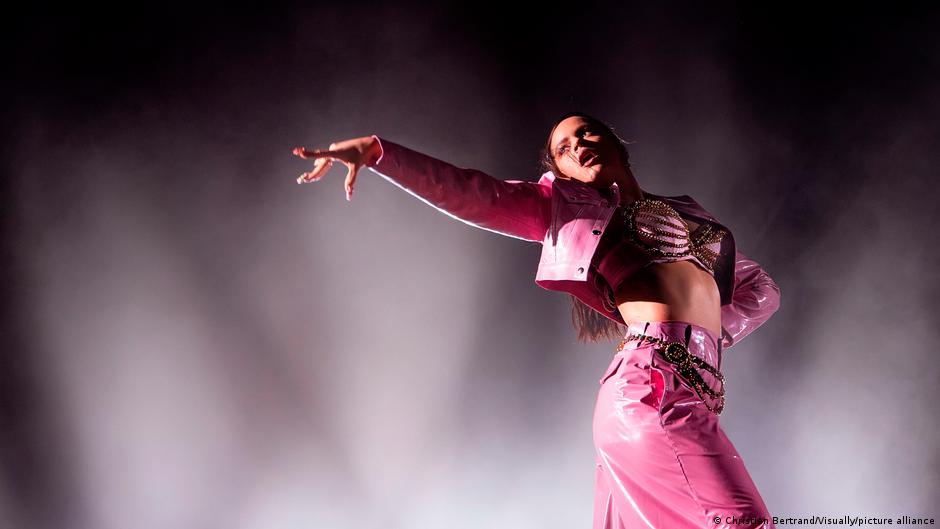
To many observers, Spanish pop star Rosalía’s career may have been an overnight success. At one moment, the now 33-year-old artist seemed relatively unknown to international audiences; The next, she was performing on the world’s biggest stages and collaborating with major names like Bad Bunny, Billie Eilish, and Björk.
In fact, her rise reflects the careful, steady progress of a young woman determined to make it big.
Rosalia Vila Tobella grew up in the Spanish town of Sant’Esteve Cesarovres, about a 40-minute drive from Barcelona. Music was a part of his life from the very beginning. When she was a little girl she learned to dance and sing and play the guitar at local venues. One of her former teachers remembered her as self-confident and determined – and how she insisted that, even as a teenager, she was destined to be a pop star.
Roots in Flamenco
Rosalía’s formal training focused on flamenco, which formed the backbone of her music. Deeply inspired by Cameron de la Isla, the pioneering flamenco singer who revolutionized the genre by blending pop and jazz influences, he began his formal flamenco education at the music school Taller de Música in Barcelona, where he immersed himself heart and soul in the expressive style from southern Spain.
The school’s founder, Luis Cabrera, described him in a DW interview as “far superior to other students”, pointing to his “insatiable hunger to learn and constant curiosity.” Flamenco is not an easy style to master; It requires control and raw emotional intensity. And to some extent this is what the singer’s expressive voice is known for.
But Rosalia did not stop here. Rather than staying within traditional boundaries, he used his flamenco training to take his tradition-inspired style in a more contemporary direction – particularly on his first two albums.
Their later work blended those influences with pop, electronic and reggaeton, opening their music to a much wider audience and marking the beginning of their international success.
a modern madonna
Collaborations with artists such as J Balvin and Bad Bunny helped him connect with listeners in Latin America and the US. And such collaborations have been carefully calculated; Music journalist Yere S. “It’s not done just to increase stream counts at the expense of artistry,” Iborra told DW: “Collaborating with people from other continents is essential, and it’s equally essential to know when to stop. Rosalia has collaborated, but they have been very selective and limited to projects that make sense.”
Music journalist Oriol Rodríguez has compared this approach to Madonna’s early days, “in the sense that she is always ahead, paying close attention to trends, adopting them, immersing herself in them, learning from them, evolving from them, and emerging with something completely new and different.”
Visual identity has always been a big part of the singer’s overall package. Like his music, his style is constantly changing – sometimes minimalist, sometimes dramatic, but always deliberate. Fashion journalist María Almenar says that her aesthetic has evolved along with her albums, with each phase reflecting a different creative concept.
“In the ‘MotoMami’ album, she plays with those red looks, with that gasoline, with motorcycles, with skin, with the sensuality of the artist, with the desire to express oneself,” Almenar explains. Musically, the 2002 album “MotoMami” was also not afraid to experiment and was praised by music magazine rolling stone For being “brazen” and “uncompromising”. The album shows her as a radical pop rule-breaker as the album shifts from ambient music to bachata to reggaeton.
A choice of algorithms
Perhaps it is this unpredictability and willingness to change with the times that has propelled the artist to the forefront of stardom. Journalist Yere S. Iborra explains that in an industry that is often shaped by social media algorithms and repetition, Rosaloa’s work stands out because it is not afraid to take risks. “The moment you play his music, even if it’s just for 10 seconds, even if it makes you uncomfortable, it’s a blessing for the culture,” he told DW.
Earlier this year, the singer received a BRIT Award for International Artist of the Year and was also named 2026 Woman of the Year at the Billboard Latin Women in Music ceremony – a testament to her current fame.
Rosalía is currently on a major world tour, performing to mostly sold-out arenas to promote the album “Lux” in a show that has been described as an intense experience blending art, pop and classical influences with avant-garde choreography.
“It was a masterpiece of art – from the scenery to the choreography to his incredible voice,” said Berlin-based Madrid-born architect Itziar Leon Soriano. who attended the Berlin show at the Uber Arena on May 1, told DW. “It was very well thought out and prepared.”
All four concerts of her Lux Tour at Barcelona’s Palau Sant Jordi were sold out in advance, pointing to the star’s special appeal in Spain and Catalonia. Her music can be seen as a way to unify a deeply politically divided Spain: Rosalía has been largely apolitical, while also increasing the visibility of the Catalan language, using it in some songs, which is rare for an artist like her.
Rather than becoming an overnight sensation, Rosalía’s career blossoms as an artist who has blended tradition and experimentation into a recipe for how global pop could evolve.
Edited by: Elizabeth Grenier