Samina Bibi, a 34-year-old mother of three, lives in a modest house on the outskirts of Rawalpindi, Pakistan’s fourth most populous city.
One morning this week, she got a message from her husband saying her salary would be delayed again.
She says she had to fight tears.
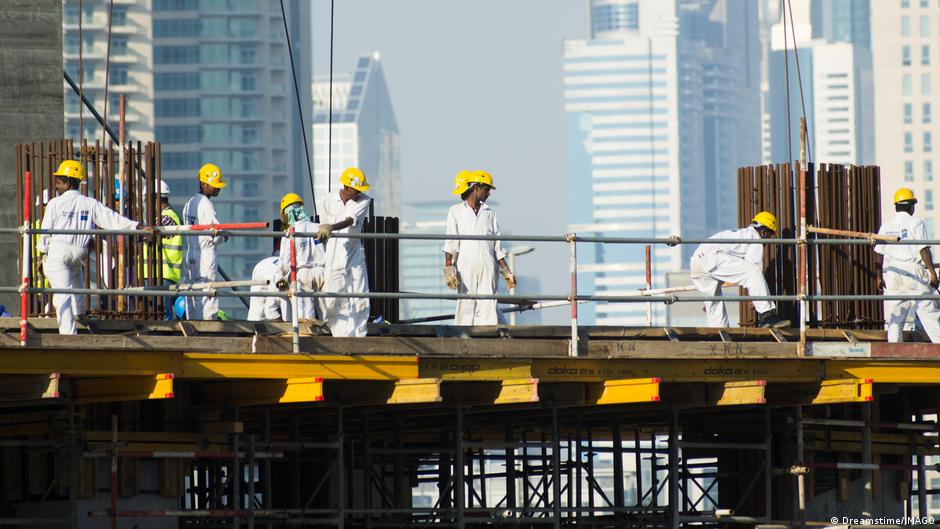
Bibi’s husband has been living in Saudi Arabia for the last decade. He works for a construction company based in Riyadh.
“They say the company is facing problems because of the regional conflict,” he said, referring to the Iran war. “I just think, what if we depend only on his 80,000 rupees (€245, $288) per month?”
For Samina, delays in sending money are not just an inconvenience, but a disruption that permeates every part of her life. She says the Middle East crisis is directly impacting the families of migrant workers in the region.
dependent on money transfers from abroad
Pakistan is one of the world’s largest remittance recipients, with tens of billions of dollars flowing in each year – much of it coming from workers in the Gulf.
For millions of families, this money provides an economic lifeline, allowing them to meet basic needs, including food, rent, education and health care.
Saudi Arabia and the United Arab Emirates (UAE) contributed more than half of Pakistan’s record $38.3 billion remittances in fiscal year 2025, according to the State Bank of Pakistan.
But as the crisis escalates, causing delays and disruptions, many are now questioning Pakistan’s heavy dependence on Gulf economies.
Analysts have warned that rising Middle East tensions, as well as labor market changes such as increased automation and a preference for hiring local workers, could jeopardize remittance income for millions of Pakistani families.
“There are increasing reports of workers being sent back from the Gulf. However, no numbers or data are available at this time,” said economic analyst Khurram Hussain.
“The UAE accounts for 20% of all remittances to Pakistan, so a sudden downturn from this source alone would create significant pressure on reserves and the families of migrant workers back home,” he said.
Remittances have become a pillar of the national economy – supporting foreign exchange reserves and even stabilizing the currency. But that pillar rests on foundations far beyond Pakistan’s borders.
“A slowdown in remittances will obviously cause a lot of hardship — we export more labor than goods and services,” Islamabad-based economist Safia Aftab told DW.
families divided by borders
Bibi’s husband has spent 10 years working in Saudi Arabia. He comes home once every two years. Meanwhile, their relationship is largely conducted via video calls.
Their children have grown up like this. “My youngest child still asks when his dad will come back for good,” she said. “I don’t know what to tell him.”
His situation is not unusual. Migration has reshaped family life across Pakistan, creating what sociologists describe as the “transnational family” – families divided between countries but bound together by financial need.
Regional tensions, economic downturns and labor market changes in the Gulf countries can directly impact the earnings of migrant workers – and, by extension, the families who depend on them.
“When something happens there, we feel it here,” Bibi laments.
Earlier this year, her husband’s work hours were cut, forcing her to send small amounts of money. A delayed payment forced her to borrow money to pay her children’s school fees. “It feels like everything has stopped,” she said. “You wait, and you hope.”
a limited safety net
Many Pakistani workers in the Gulf have low- or semi-skilled jobs, making them particularly vulnerable to layoffs during economic downturns.
“A lot depends on a region and a type of labour. Many young people are now coming to us looking for work visas to Malaysia or even Belarus. They consider UAE work contracts an uncertain prospect,” Osama Malik, an Islamabad-based immigration lawyer, told DW.
He said that in Saudi Arabia, there are often delays in payment of salaries to foreign workers, as well as some restrictions on how much money can be sent back to their home countries.
human cost of migration
For families, migration brings economic benefits but also creates emotional stress.
The wife single-handedly manages the household, brings up the children, takes care of the in-laws and takes financial decisions. Meanwhile, her husband lives in shared accommodation abroad and works long hours.
“We talk every day,” she said. “But it is not so.”
Bibi told DW that there are moments when distance feels overwhelming, especially during illness, school events, family emergencies. “You realize how much is missing.”
odd Future
Experts say Pakistan should provide greater protection for its workers by strengthening domestic industries and diversifying migration destinations.
Aftab stressed, “Pakistan should not depend so much on money coming from the Gulf or anywhere else.”
“There is no substitute for growth in domestic goods-producing sectors. We need to focus on improving productivity in agriculture, manufacturing and high-end services,” he said.
However, for families like Bibi’s, such policy debates seem far-fetched.
“Our lives depend on their jobs there,” he said. “If something happens, we have nothing here.”
Edited by: Srinivas Majumdaru