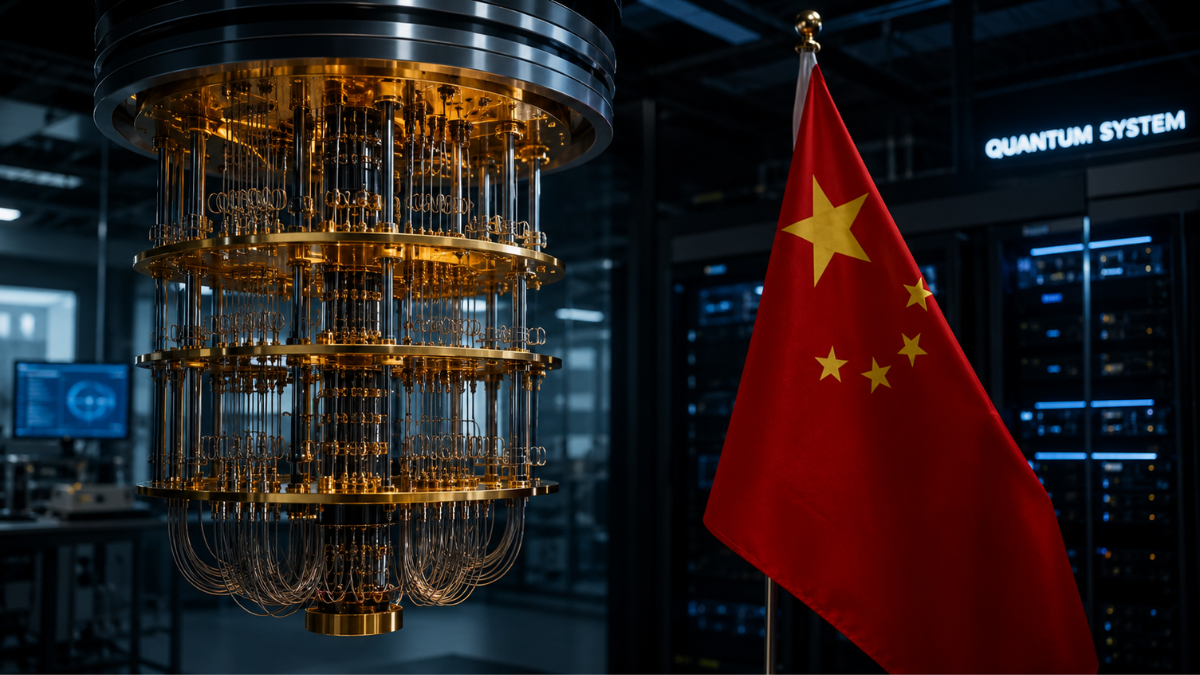
The system more than doubles the chip capacity of its previous generation, of 72 qubits.
The Origin Quantum computer does not incorporate fault-tolerant error correction.
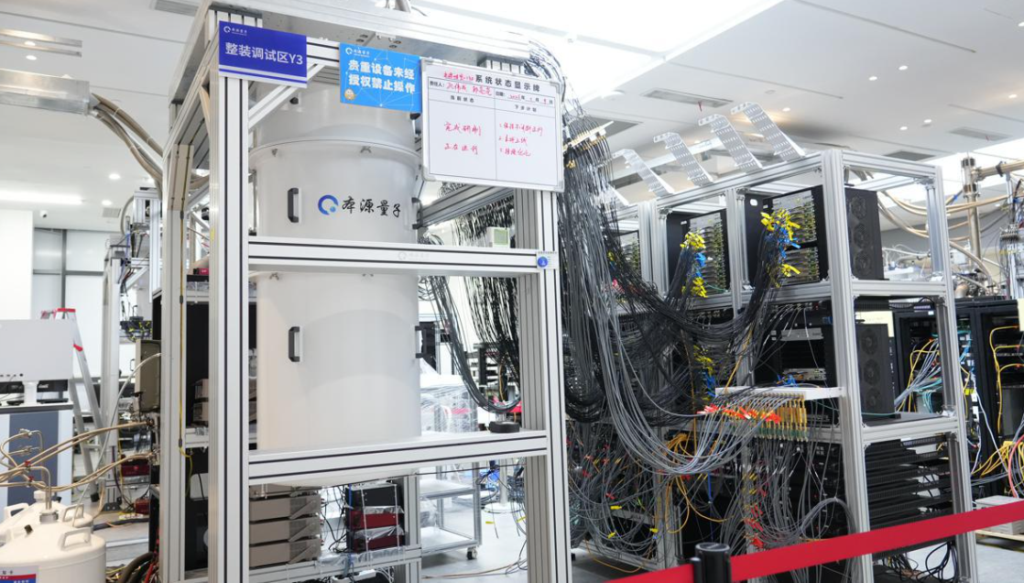
Origin Quantum, a Chinese company linked to the national government, launched Origin Wukong-180, its fourth generation of superconducting quantum computer. The system offers a free trial that is available to global users through the company’s cloud platform and, as reported by local media China Daily, Origin Quantum also offers free computing time for researchers and scientists from academic institutions who submit qualified projects.
Wukong-180 is equipped with a superconducting chip 180 physical qubits (the basic processing units of a quantum computer). According to data from the company websiteits new quantum computer operates with an error rate of less than 1% both in individual operations and in operations between pairs of qubits. This is a key indicator of reliability, since the lower the error per operation, the more complex calculations the system can perform before the results become unreliable.
the chip also includes 251 coupling qubitswhich coordinate the interactions between computational qubits but do not provide direct computing capacity.
On the other hand, Wukong-180 operates within the NISQ regimen (noisy intermediate-scale quantum computing), the current stage of global quantum development, according to the specialized magazine The Qubit Report.
In this regime, quantum computers can perform certain calculations with an advantage over classical systems, but they do not yet incorporate fault-tolerant error correction (the mechanism that would allow millions of operations to be chained without the accumulated error invalidating the results).
Without that capability, current NISQ systems cannot sustain the deep quantum circuits that would be needed to attack cryptographic algorithms such as the elliptic curve scheme (ECDSA) that protects Bitcoin signatures.
Origin Quantum advances its quantum developments
The previous generation, 72-qubit Wukong, was launched in January 2024 and recorded, according to China Daily, approximately 50 million remote accesses from more than 160 countries and completed more than 900,000 global tasks.
In 2025, according to the same media, Origin Quantum completed China’s first export and commercial sale of domestically developed quantum power. Wukong-180 more than doubled the capacity of the chip of that generation and is positioned, according to the company, among superconducting systems with more than 100 qubits publicly accessible in the cloud, along with platforms from IBM, Google Quantum AI and Rigetti Computing.
Additionally, last February, the company released Origin Pilot, its quantum computing operating system, for free public download.
Quantum advances and the ‘Q-day’ horizon for Bitcoin
While Wukong-180 does not represent a direct threat to the cryptography that protects Bitcoin, its development is framed in a context of constant advances in quantum hardware and each launch of a larger-scale system. It is a sign of maturation of the industry.
In this context, Google, Cloudflare and Harvard researchers place ‘Q-day’ (the moment when a quantum computer could compromise classical cryptography) before 2030as reported by CriptoNoticias. However, these studies and estimates were refuted by specialists such as Adam Back.
In this way, while the post-quantum debate faces different actors, advances such as those provided by Origin Quantum with domestic systems of more than 100 qubits, accessible in the cloud and with progressive improvements in fidelity, form another piece in the quantum race, regardless of when its inflection point arrives.