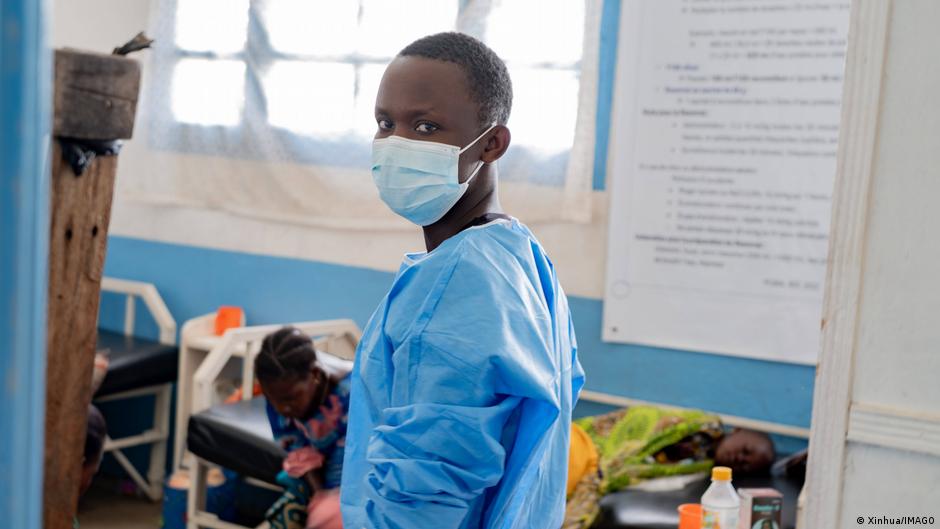
Since the beginning of the millennium, there has been a new Ebola outbreak almost every year. However, the current pandemic is different.
Most Ebola outbreaks, including the devastating epidemic several years ago that caused at least 11,000 deaths in West Africa between 2014 and 2016, can be traced to the Zaire strain, for which a vaccine has now been developed. However, the latest outbreak is caused by the rare Bundibugyo strain, named after a region of Uganda where it was first reported in 2007. There is neither a vaccine nor a drug to fight this strain, which kills one in three people infected with it.
The current outbreak in eastern Democratic Republic of Congo (DRC) and Uganda is the third and already the deadliest Bundibugyo-related epidemic to date. At least 139 people had died as of Wednesday, according to the World Health Organization (WHO), with an additional 600 suspected cases.
“I am deeply concerned about the scale and speed of the pandemic,” WHO Director-General Tedros Adhanom said at the UN General Assembly in the Swiss city of Geneva this week. He also warned that “as field operations increase, including strengthening surveillance, contact tracing, and laboratory testing, these numbers will change.”
As soon as he learned of the outbreak, Tedros immediately declared an international health emergency, without consulting experts, as is customary. This is because the virus was reportedly already spreading without attention for several weeks. Health experts are now racing to stop the virus and risking their own safety in the process. Meanwhile, some are asking whether the outbreak might have been seen faster if the U.S. government had not drastically reduced its contributions to global health care efforts.
bigger outbreak than expected
US epidemiologist Eric Feigl-Ding, who was one of the first prominent scientists to warn of the emerging coronavirus pandemic in January 2020, said we are likely only seeing the tip of the iceberg. “[Ebola is] “It’s already killing health care workers and it’s already spread to many different areas,” he told DW. “With very little testing, we’re already detecting a lot of people.” [cases]”That means we’re just scratching the surface and this outbreak is much more widespread than we thought.” He also warned that the latest outbreak is spreading much faster than the 2014 epidemic in Guinea, Sierra Leone and Liberia.
Ebola is spread by direct contact with infected people or their bodily fluids. This means the risk of infection is more limited than with the SARS‑CoV‑2 virus, which can spread through the air. In theory, therefore, the Bundibugyo variant could be controlled by isolating infected individuals, through mass testing and contact tracing.
“The issue is the speed of deployment,” Feigl-Ding said, adding that USAID had it when it was on the ground, delivering medicines, and funding local health care workers and clinics to do so. “Now USAID is gone. This is clearly one of the examples of what happens when you destroy the health care infrastructure in many of these countries.”
The U.S. Agency for International Development (USAID) is certainly the most famous example of collapsed American institutions since Donald Trump’s return to the White House. In January 2025, the re-elected US President issued an executive order freezing all aid payments for 90 days and ordering a review of how the funds are being used. Many USAID employees were laid off and the budget was reduced by 90%. While Congress later increased funding again, the temporary disruptions have left their mark around the world. To make matters worse, many European governments, including Germany, have also drastically cut their development aid.
Trump’s disruptive cost-cutting measures were also made possible by tech billionaire Elon Musk, who was then the head of the US Department of Government Efficiency (DOGE). In February 2025, Musk admitted to the US Cabinet that he had “mistakenly” ended some programs to contain the Ebola virus “very summarily”. the new York Times The daily newspaper later reported that not all canceled programs were reinstated. It also said the cuts have worsened the Ebola outbreak in Uganda, according to staff at the US Embassy in Kampala, the Ugandan capital.
Following his inauguration in January 2025, Trump also initiated US withdrawal from the WHO, which became official a year later. Previously, the US was one of the most important donors to the global health body. In 2023 and 2024, the US contribution was more than $1.2 billion (about €1.03 billion).
In previous Ebola outbreaks, WHO worked closely with the US Centers for Disease Control and Prevention (CDC). Yet the US public health agency has seen drastic cuts under Health Secretary Robert Kennedy Jr., who claimed to cut red tape. In April 2025, Kennedy announced that 25% of the CDC workforce would be laid off and 35% of outside contracts would be eliminated. US media outlets later reported that key staff tasked with fighting Ebola were “accidentally” fired and then rehired. The CDC said more than 30 of its staff are currently helping contain the Ebola outbreak in the Democratic Republic of Congo (DRC).
hard work in difficult circumstances
“The lack of humanitarian and health-related resources in the DRC is inevitably detrimental to the Congolese population and, to a lesser extent, to the prevention and detection of the epidemic,” Julie Drouet, country director in the DRC for the global organization Humanitarian Action Against Hunger, told DW.
He said that from his perspective several other factors also contributed to the late detection of Ebola cases, including the fact that “the strain identified is not one that is commonly seen in the DRC.” He told DW that initial tests returned negative results because they focused on the more common Zaire strain. “Moreover, the first deaths occurred within the community rather than in health facilities.” This allowed the virus to spread for a relatively long time without public health officials paying attention and raising the alarm.
The resource-rich provinces of North Kivu, South Kivu and Ituri in eastern DRC are already plagued by violence and instability. The Ebola outbreak has made matters worse. When armed groups linked to Rwanda advanced in early 2025, local people fled and the virus was able to spread more easily, further complicating the efforts of aid workers.
But aid workers are prepared for such challenging conditions, Drouet told DW. “We are currently making every possible effort to contain the pandemic. For example, humanitarian air bridges are also being organized to facilitate access and distribution of aid.”
Authorities have now also confirmed cases of Ebola in the eastern DRC city of Goma and the Ugandan capital. Both cities have better infrastructure than Ituri province, where the outbreak began, although both suffer from high population density, which could allow the virus to spread rapidly.
WHO has provided an initial tranche of $3.9 million to support national health care systems to fight the Ebola virus outbreak. Health experts are also calling on governments around the world to significantly increase this amount.
With additional reporting from Anthony Howard.
This article was originally written in German.