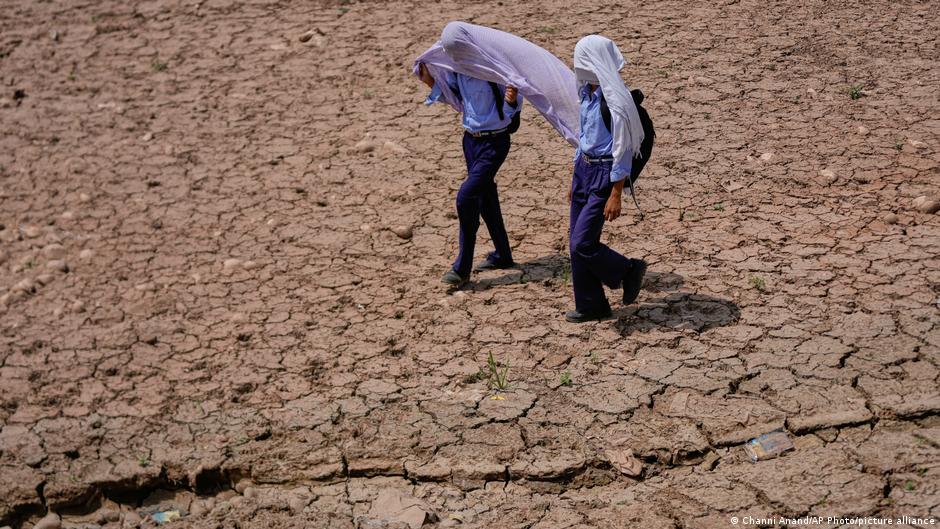
For years, the worst climate scenario served as a strong warning of what could happen if the world failed to curb fossil fuel use. Temperature increases of more than 4 °C (7.2 °F) by the end of the century would bring with them devastating consequences, including deadly heat waves, rising seas, crop failures and large-scale displacement.
but a scientific paper Published in April it said the doomsday pathway – known as RCP8.5 and later SSP5-8.5 – is now less likely. Designed as a benchmark to help governments prepare for dangerous possibilities, worst-case scenarios were not predicted.
Climate researcher Detlef van Vuuren, the lead author of the new paper, told UK-based climate science platform Carbon Brief that this has always been a “low-probability, high-risk scenario.”
This reflects the knowledge and energy trends of the late 2000s, when the world relied more on burning coal, oil and gas, warming the planet. But that trend has changed now.
“The world is not moving towards a worst-case scenario, because we have actually taken political steps that allow us to move away from that,” French climate scientist Christophe Cassou told the AFP news agency.
The shift to renewable energy generation is happening faster than expected, with many governments adopting policies that have slowed projected emissions growth, according to the new assessment.
Friederike Otto, a climate scientist at Imperial College London, said that in a worst-case scenario “it was assumed that humanity would continue an unchecked coal-powered fossil fuel boom, which fortunately did not happen.”
Acknowledging this as “fundamentally good news”, he urged that “this should in no way lead to complacency.”
Climate skeptics are accepting the revised scenario
US President Donald Trump seized on the amendment to claim climate scientists were “wrong”, prompting attacks on climate science by skeptics and politicians in both the United States and Europe.
The far-right Alternative for Germany is one of them. During a parliamentary debate on Wednesday the AfD used the new story to advocate rolling back the country’s climate policies.
Niklas Hohne, executive director and founder of Germany’s NuClimate Institute, described the drama as “a blatant distraction tactic by climate deniers and the far right.” As the world is in the grip of another energy crisis, he said fossil fuel defenders “will leave no stone unturned in fabricating an alleged scandal with outrageous arguments and diverting attention from the real problems.”
Cassou also said that scientists “have not been cautious at all.”
In addition to eliminating the worst-case scenario, researchers also abandoned their most optimistic climate pathway. They warned that the world is now likely to temporarily limit temperature increases to more than 1.5 degrees Celsius above pre-industrial levels – the limit enshrined in the 2015 Paris Agreement – as a means to avoid the worst climate impacts.
The message is now clear. Since emissions are not reduced rapidly despite years of warnings and climate pledges, the world could still warm by about 3 degrees Celsius by 2100.
This would sharply increase climate impacts already visible today, including increasingly deadly heat waves, floods, storms and droughts. This would mean massive crop failures and sea level rise, affecting more than 600 million people – all of which would have wide-ranging consequences for food security, the economy and human health.
UN climate proposal faces opposition
Meanwhile, the UN General Assembly has approved a non-binding resolution strengthening countries’ obligations to tackle climate change.
The UN body voted overwhelmingly in favor of endorsing the advisory opinion issued last year by the International Court of Justice. That decision said countries could be in breach of international law if they fail to adequately protect people from dangerous planetary warming.
“The world’s highest court has spoken. Today, the General Assembly has responded,” UN Secretary-General Antonio Guterres said in a statement. “This is a powerful affirmation of international law, climate justice, science, and the responsibility of states to protect people from the growing climate crisis.”
The US, which withdrew from the Paris Agreement under Trump, as well as petrostates Russia, Iran and Saudi Arabia opposed the measure.
It is hoped the proposal, led by the Pacific island nation of Vanuatu – which already faces rising seas and intense storms – will reinforce the principle that governments have a legal responsibility to cut greenhouse gas emissions.
The adopted text calls for phasing out subsidies for fossil fuel exploration, production and exploitation, and calls for violators to pay compensation.
Edited by: Tamsin Walker