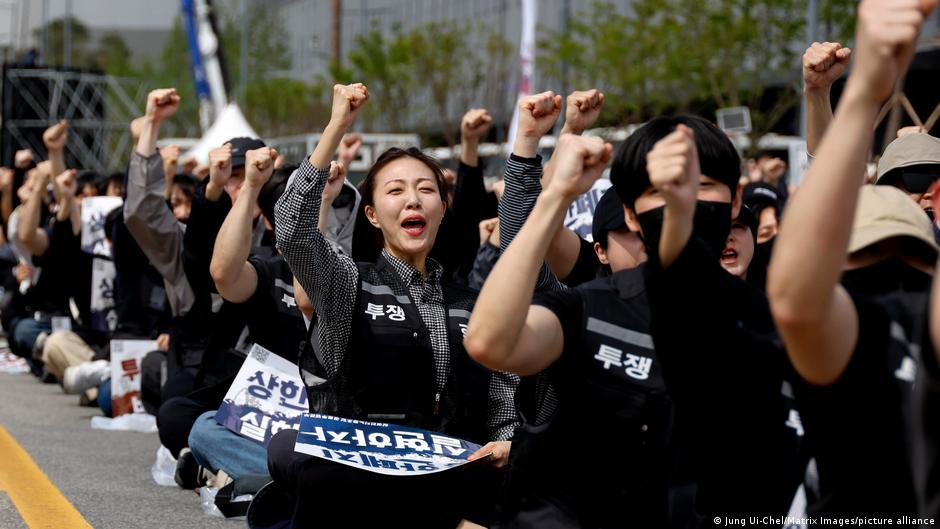
Samsung workers in South Korea approved a wage agreement on Wednesday, averting a strike that threatened to disrupt global chip supply and damage the country’s economy.
The deal comes as demand for chips for artificial intelligence (AI) data centers has driven record profits and follows months of negotiations over bonuses tied to Samsung’s fast-growing semiconductor business.
In April, Samsung’s first-quarter operating profit surged nearly 750% year-on-year, while its market capitalization topped $1 trillion (€859 billion) for the first time this month.
What’s included in the deal?
The government-brokered agreement covers about 78,000 employees, a little more than 60% of the company’s workforce, each of whom will be eligible to receive a bonus of about $370,000 (€317,904) this year.
According to the Samsung union, about 74% of the more than 62,000 union members voted in favor of the agreement, which was partly driven by the fact that workers at rival chip maker SK Hynix received bonuses three times higher than those paid by Samsung last year.
Under the agreement, Samsung will introduce a new 10-year performance bonus system with an average 6.2% pay increase for semiconductor workers.
The deal also exposed rifts within the company as employees in other divisions say the deal disproportionately benefits semiconductor workers.
A small union representing consumer electronics workers has asked a court injunction to stop the agreement.
Samsung plans semiconductor test plant in Vietnam
Meanwhile, an exclusive Reuters report said Samsung Electronics plans to invest 39 trillion dong ($1.5 billion) to build its first semiconductor testing plant in Vietnam.
Construction of the facility, located about 60 km (37 mi) north of Hanoi, has already begun. Operations are expected to begin in November 2027.
The plant will focus on older memory chips, which remain in short supply as major chipmakers shift more production capacity toward high-end AI semiconductors used in data centers.
Edited by: Zack Crellin