Days before voting, Ethiopia’s electoral body, the National Election Board of Ethiopia (NEBE), Announced that elections would not be held in 46 electoral districts in the conflict-affected Amhara and Tigray regions. Citing insecurity and political tension.
The NEBE said voting would not take place in eight of the 138 electoral districts in the northwestern Amhara region amid what it described as “adverse conditions” amid clashes between militia groups and the army. The board also suspended voting in 38 districts of Tigray, where tensions are high between the federal government and the Tigray People’s Liberation Front (TPLF).
Ethiopia’s 130 million citizens are hoping for improvements in their daily lives when they vote in parliamentary elections on June 1.
“Even though I am not satisfied with the current economic situation, I believe Ruling Prosperity Party will remain in power,” a 50-year-old man in Addis Ababa, who chose to remain anonymous, told DW.
Another young voter talked about the need for peace in the country and said that only then can real development be realized. “This will reduce the current inflation problem,” he told DW. He also said he hoped the elections would result in peace and stability.
“Elections are always good,” said a 26-year-old man in the Ethiopian capital, who also chose to remain anonymous. “But very little attention is being paid to the problems of people struggling with inflation.” As a young citizen, he said he was very concerned about the migration of many young Ethiopians to other countries due to lack of jobs.
Concerns ahead of June 1 elections
Contrary to the expectations of the victims, experts say that the situation will remain critical. “Elections in Ethiopia will be a purely ceremonial affair that provides electoral legitimacy to the government. There is no way to change or challenge the government through elections,” Kjetil Tronvoll, a peace and conflict researcher at Oslo New University College, told DW. For them, the electoral process is a symbolic exercise rather than a political contest.
Coalition for Ethiopian Unity (CEU)The alliance of many opposition parties is also making similar criticisms. Spokesman Getnet Worku said the CEU is calling for “an end to the war, the release of political prisoners, greater political freedom, and dialogue with the genuine opposition and elites as a prerequisite for elections”.
CEU President Abraham Getu stressed that the coalition’s participation would depend on developments at the grassroots level. “The decision will be dictated by the concrete circumstances at hand,” Getu said.
The government is also taking strict action against journalists. In October 2025, all nine local DW correspondents were temporarily suspended. In December 2025, seven were allowed to return to work. In the remaining cases, authorities took stronger measures and revoked the accreditation of two DW journalists.
NEBE has published figures that, at first glance, reflect a functioning democracy: 47 registered political parties, approximately 11,000 candidates and millions of voters. However, the ruling Prosperity Party holds 457 of the 547 parliamentary seats.
Experts agree that this will remain the case. “On June 1, Ethiopians will definitely re-elect Prime Minister Abiy with a majority of more than 90%,” political analyst Martin Plaut told DW. “He achieved it last time too and he will achieve it this time too.”
He also sees the election as legitimization for the government. “Whether this will have any real impact on the lives of ordinary people is really unclear,” Plaut said. “And whether it will lead to further unrest and conflict – either with the northern region of Tigray or enable Prime Minister Abiy to start a war with Eritrea or become embroiled in further conflicts in Sudan – we simply don’t know.”
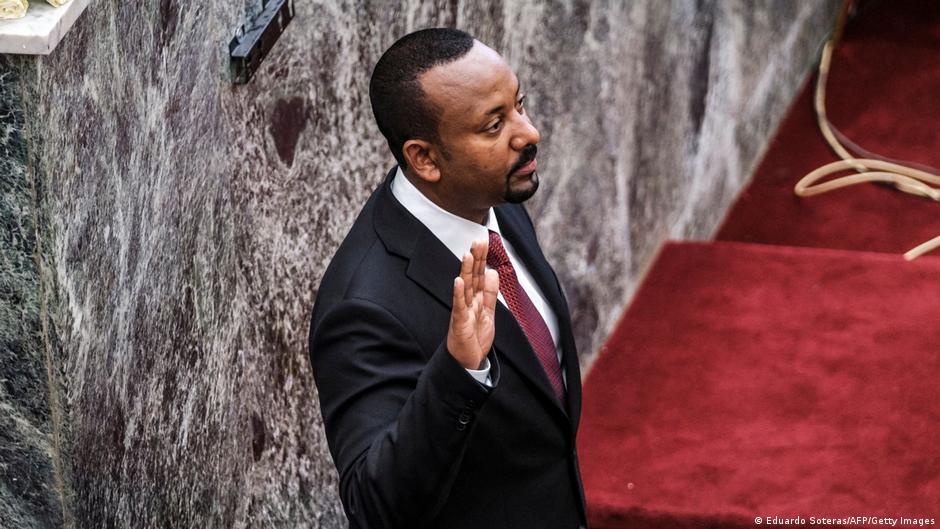
Prime Minister Abiy Ahmed declared that the elections were a sign of stability and progress. But the 2019 Nobel Peace Prize winner, who was honored at the time for her democratic reforms, now stands at the helm of a nation deeply divided along various fault lines.
Increasing tension with Tigray
Efforts by the dominant TPLF party to seize control of the area in Ethiopia’s Tigray region could lead to a renewed war with the federal government, according to analysts.
Between 2020 and 2022, the TPLF waged a brutal civil war against the federal government that left at least 600,000 people dead. The 2022 peace deal led to the formation of a new transitional government to administer Tigray and sidelined the TPLF leadership.
Since then, little political progress has been made. The TPLF’s old guard reinstated the regional parliament and elected TPLF leader Debretson Gebremichael as its president – a power play that threatens peace.
The TPLF ruled Ethiopia for three decades but was banned as a political party in 2025 after the war in Tigray and the subsequent peace deal. Abiy’s demand for direct access to the Red Sea is also raising tensions with Eritrea.
Additionally, Fano militias in the Amhara region and the Oromo Liberation Army in Oromia are fighting against the Ethiopian National Defense Forces (ENDF). The Fano militia controls some major cities and roads in the Amhara region.
election results predicted
According to Tronvoll, the elections could lead to local instability in some areas of the country. Some militia groups have issued statements opposing the holding of elections. “Therefore, they may try to disrupt the electoral process in the local communities where they are present or attack the process,” he said.
According to Platt, the elections are not democratic: “These are not real elections and should not be treated as such.” But Platt also said that doesn’t mean the country is at a crossroads. Referring to rising tensions between Ethiopia, Eritrea and Sudan, he said the dangers lie in the complex political situation that remains after the elections.
The United Arab Emirates (UAE) is Ethiopia’s strongest ally, but the Gulf state has long been accused by UN experts and international observers of secretly supplying the paramilitary RSF militia in Sudan – which is fighting against the Sudanese army – with weapons, drones and money. According to Plaut, this could destabilize the entire region.
Seyoum Getu Hailu and Kathy Short in Addis Ababa contributed to this article
Edited by: Crispin Mavakideau