
The price of bitcoin (BTC) falls on the afternoon of this Tuesday, June 2, 2026 to the area close to $67,000.
In the following graph you can see how the price of the digital currency has moved over the last 7 days:
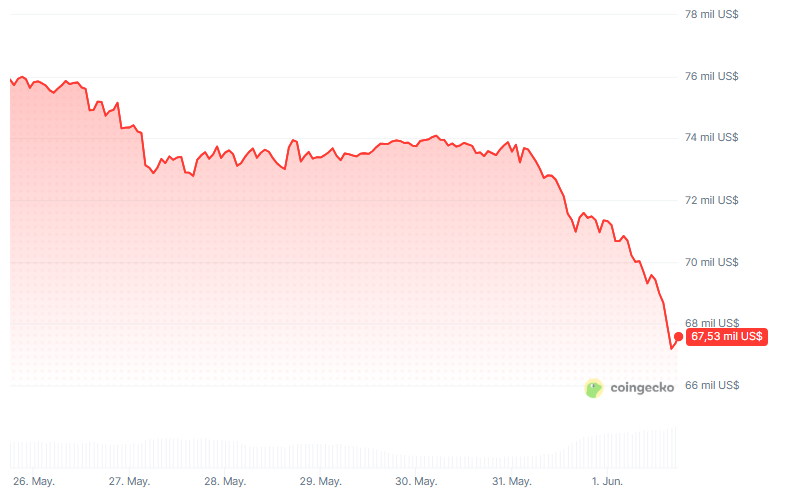
This same morning, CriptoNoticias reported that the digital currency had lost support at $70,000. Although, as explained there, the fall was multi-causal (caused, among other reasons, by increased tensions in the Middle East and by massive capital outflows from bitcoin ETFs), it is striking that it occurs a few hours after Strategy (the publicly traded company with the most bitcoin in its possession) announced the sale of 32 BTC.
So much trouble for only 32 BTC? 32 bitcoin represent 0.0037% of Strategy’s holdings. In strictly financial terms, the operation is insignificant. But Markets do not read balance sheets: they read signals. And this was a sign that many did not expect (or did not want) to see.
Strategy is not simply the largest corporate holder of bitcoin. He is, above all, a buyer. An almost mythological buyer who for years built his identity around a single conviction: accumulate BTC regardless of the price, regardless of the macroeconomic context, regardless of market pressures.
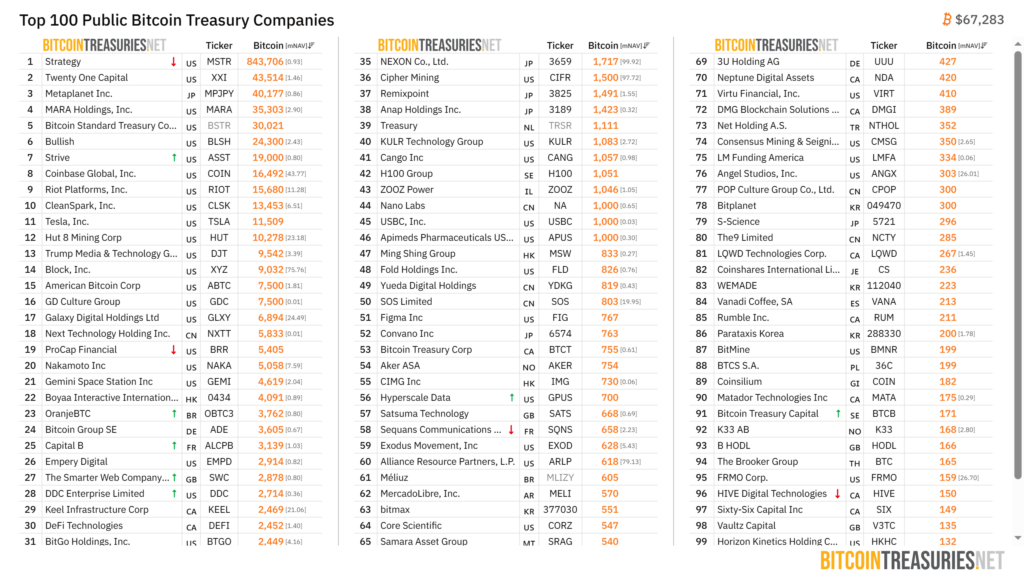
Michael Saylor transformed that conviction into narrative, and the narrative into price. Each purchase announcement was a vote of confidence that the market processed as an implicit floor.
The problem is not what Strategy did, but what he ceased to be in the collective imagination of the market: the eternal buyer that never sold.
For years, when the price fell, there was some comfort in knowing that on the other side was a company willing to buy more and—so it was believed—never sell. That certainty, although it was never a guarantee of anything, functioned as a psychological anchor. The sale, no matter how small, cracked that image.
Furthermore, the moment matters as much as the act. Strategy did not sell in a bull market, when it would have gone unnoticed. He sold in the midst of a correction that has already been going on for weeks, with bitcoin ETFs registering their worst streak of outflows since their launch and with a geopolitical context that pushes investors away from assets usually considered “risky.” In this scenario of fragility, the news did not need to be big to make noise.
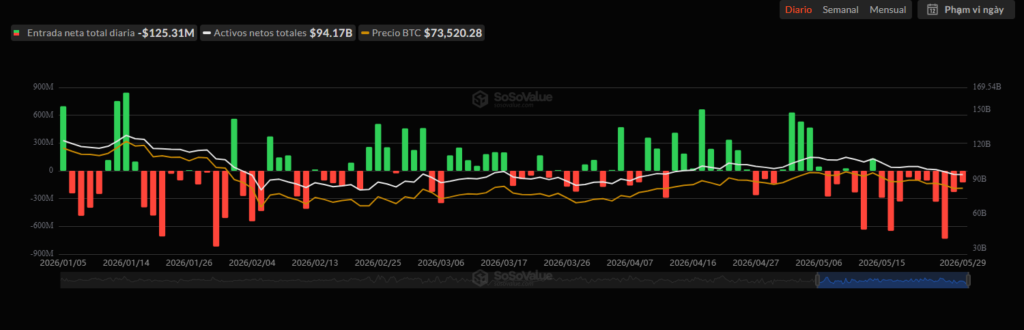
The precedent is also disturbing. If Strategy—with the financial muscle it built, with the capital structure specifically designed to sustain this strategy—begins to sell to meet obligations, the inevitable question is what happens to the companies that imitated it with less room for maneuver. The “buy bitcoin and hold forever” thesis is beginning to show its weaknesses.
Analysts know that panic spreads quickly and that is why bearish projections that only a few weeks ago seemed forgotten have been reactivated. As CriptoNoticias reported, several influential traders see it viable for the digital currency to fall to $40,000 or $45,000 in this cycle.
Strategy is likely to continue accumulating bitcoin in the long term. Saylor already clarified it. And it is likely that these 32 BTC will remain as a minor anecdote in the company’s history. But in markets, trust is built slowly and eroded quickly.
What broke today was not Strategy’s position, but the certainty that it would never sell. And that certainty, once lost, cannot be recovered with a statement.