
Artificial intelligence (AI) agents using the x402 payment protocol surpassed 100 million transactions on the Base network in just nine months, according to a report published on June 3, 2026 by the analysis firm Chainalysis. The data shows an acceleration in the use of autonomous payments between machines, a technology that seeks to allow AI systems to contract services and access digital resources without human intervention.
The x402 protocol, developed by Coinbase, allows you to integrate payments directly into web requests. As reported by CriptoNoticias, when an AI agent needs to access a service, it receives a payment request, executes a transfer with stablecoins and sends the request again accompanied by proof of payment.
According to Chainalysisactivity went from practically zero levels in mid-2025 to more than 100 million accumulated transactions during the first quarter of 2026. Growth accelerated especially during the fourth quarter of 2025.
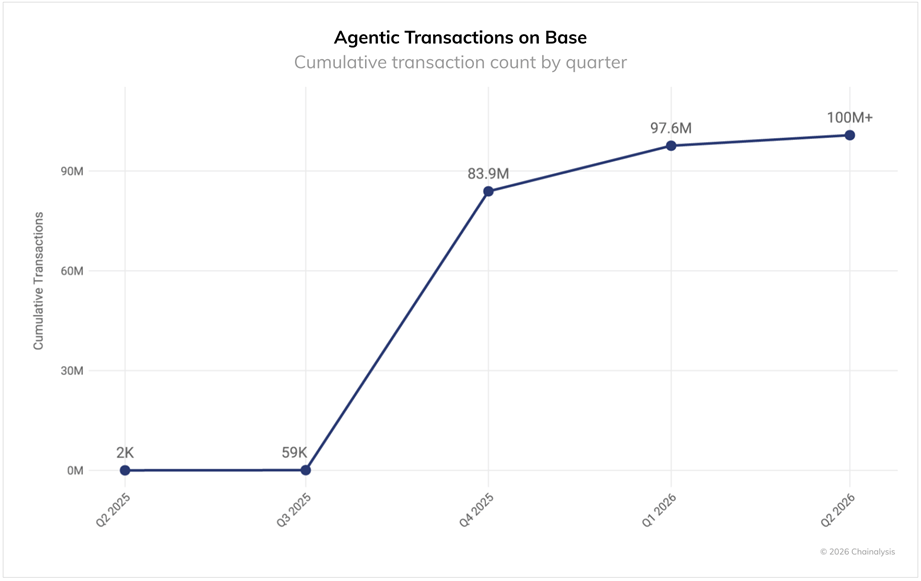
It is worth noting that Part of that increase was related to PING, a memecoin designed as a “pay to mint” experiment. The system required users to make a payment of 1 USDC via x402 to receive new tokens. According to the report, this dynamic drove a more than 10,000% increase in weekly transactions and allowed PING to process more than 150,000 operations during its first month.
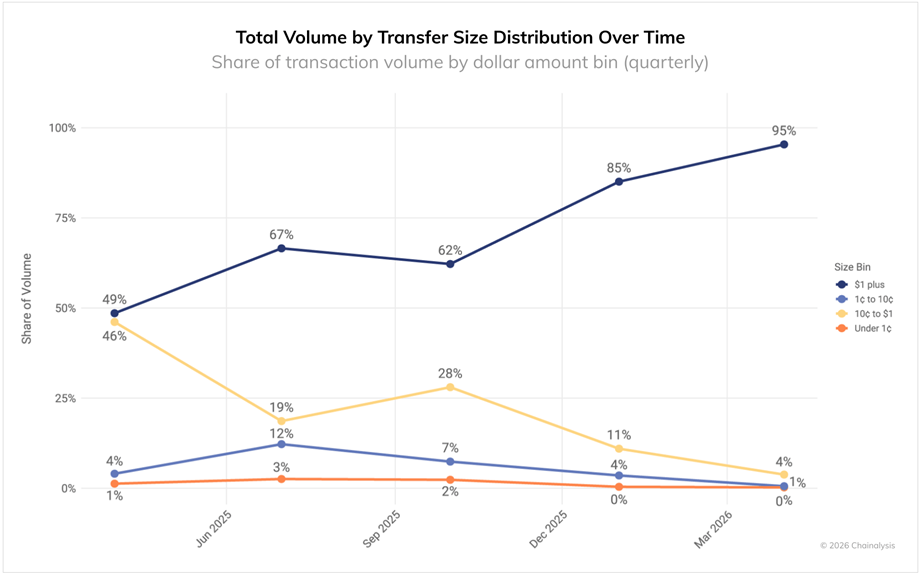
Although speculation contributed to the initial growth, the data suggests an evolution in usage patterns. Transactions over $1 accounted for 49% of transferred volume at the beginning of 2025. By early 2026, that proportion had risen to 95%.
At the same time, transactions with values between USD 0.10 and USD 1 went from representing 46% of the volume to just 4%. For Chainalysis, this change indicates that users They are financing their wallets to cover higher value payments and not only to carry out micropayment tests.
Another indicator that points to greater use is converting test users into active users. The firm analyzed the wallets that initially made a transfer to themselves to test the system and subsequently made payments to third parties. The conversion rate of these users increased fourfold in a six-month period.
Retention also showed a positive trend. Although the metrics registered strong fluctuations during the first months due to the small number of participants and the effect of speculative episodes such as PING, the proportion of wallets returning week after week has progressively increased.
The report also identifies a differentiated profile between those who use x402 and the rest of the Base participants. The wallets associated with the protocol have an average age of 197 days, compared to 423 days for all network users. In addition, They maintain an average of 26 different assets, compared to four in the rest of the user base.
Chainalysis also points out that these wallets receive approximately twelve times more capital than the average Base walletsuggesting that participants are allocating funds specifically to sustain activities linked to automated payments.
It is important to clarify that, despite these advances, the firm warns that institutional adoption is still in an early stage and that most of the activity continues to be concentrated among native users of the cryptocurrency ecosystem. Additionally, questions remain about how much of the observed growth is driven by sustainable use cases and how much was driven by speculative incentives.
For now, the emergence of a repeat user base and the increase in the economic value of transactions suggest that autonomous payments between machines are beginning to transcend the experimental phase. In a scenario where AI agents execute financial, trading or data analysis tasks independently, the ability to make instant and programmable payments could become one of the most relevant applications for cryptocurrency networks in the coming years.
More than the volume achieved so far, the question will be determining whether this infrastructure manages to attract companies and institutions that demand automated services on a large scale.