For the regional Gulf Cooperation Council (GCC) states – Bahrain, Kuwait, Oman, Qatar, Saudi Arabia, and the United Arab Emirates (UAE) – the consequences of a US–Israeli conflict with Iran go far beyond the immediate military threat.
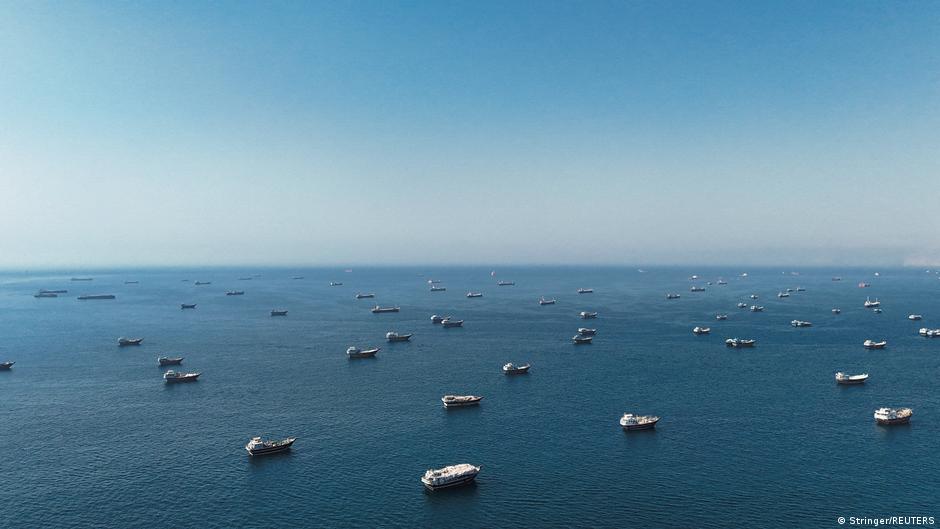
Since February 28, when the US and Israel launched joint strikes on Iran, and despite a nominal ceasefire, the GCC countries have been performing a difficult balancing act. Key infrastructure in the region is being targeted by thousands of ballistic missiles and drones, while the blockade of the Strait of Hormuz imposed by both Iran and the US has had a major impact on trade and economic stability. At the same time, Gulf governments are trying to avoid going deeper into the conflict.
‘Big change in perception of security and politics’
In recent years, the Gulf countries, and especially Saudi Arabia, have implemented ambitious economic reforms aimed at diversifying their economies and reducing dependence on oil revenues. Increasingly, these overhauls have also shaped foreign policy, as tourism, aviation, logistics and artificial intelligence have become core pillars of national development strategies.
But according to Cinzia Bianco, a Gulf analyst at the European Council on Foreign Relations who recently returned from the United Arab Emirates, a new era is underway. “Iran has inspired a major change in their perception of security and politics,” he told DW.
Meanwhile, uncertainty has shaken the tourism sector.
In March, Dubai International Airport came under attack by Iran-launched drones and more than 30,000 flights to and from the Middle East were cancelled. Many airlines are still operating on a reduced schedule. Additionally, due to the blockage of the Strait of Hormuz, jet fuel prices have almost doubled year-on-year.
“The Gulf’s image as a safe haven has certainly been shattered in the short to medium term,” said Pauline Rabe, Gulf observer at the Berlin-based Middle East Minds think tank.
“Potential tourists are reminded where the country is located, namely, between geopolitically tense region,” He said. “They will now think twice or thrice before deciding to go to the Emirates.”
Financial analysis firm Moody’s recently forecast that hotel occupancy in Dubai will decline from 80% to 10% in the second quarter of 2026.
In April, the World Bank cut its economic growth forecast for the GCC to 1.3% from 4.4%.
Impact on energy infrastructure
In addition to airports, Iran has also targeted hotels and US military bases in the Gulf countries, as well as local energy infrastructure. Qatar’s state-owned energy company QatarEnergy said it would take up to five years to repair the Ras Laffan industrial center after it was hit by an Iranian ballistic missile in March.
Saad Al Kaabi, Chief Executive of QatarEnergy, told British broadcaster BBC The scale of the damage has “set the region back 10 to 20 years.”
Meanwhile, Iran and the US continue to use their blockade of the Strait of Hormuz as a “pressure card” for peace talks.
Meanwhile, oil and gas exports from Bahrain, Kuwait and Qatar are disrupted. Moody’s recently downgraded Bahrain’s outlook to “negative” from “stable”.
However, the economic outlook is somewhat different for Oman, Saudi Arabia and the United Arab Emirates, as they have access to bypass infrastructure: Saudi Arabia diverts some of its production from its East-West pipeline to the Red Sea, and the UAE uses a local onshore pipeline from Habshan to Fujairah for exports.
According to Saudi Arabia’s state oil company Saudi Aramco, the first quarter of 2026 saw a 26% jump in profits. Since the UAE left the Organization of the Petroleum Exporting Countries (OPEC) and the broader OPEC+ alliance on May 1, 2026, it can now decide independently of the quota system how much oil each member can produce.
How will the recovery shape up?
Analysts predict that even after the current war and the reopening of the Strait of Hormuz – a key waterway transporting one-fifth of the global oil supply – the high risk premium will continue to drive prices in the Gulf region.
Rabe believes the financial sector will be among the first to recover. “I believe that once the war is over, or at least, once the immediate fighting stops for a longer period, this established infrastructure will be reactivated more quickly,” she told DW.
But Gulf countries have realized that they have to take responsibility for their own security. regional stability In the future, he added.
“Many assumptions have been questioned, for example, that you can give an economic stake to the Iranian regime to guarantee its security,” Bianco said. In his view, this is no longer considered a reasonable idea, nor is the notion that the Gulf countries can rely exclusively on the US for their security.
As a result, new defense agreements are in the works: in May, the United Arab Emirates signed an agreement with France and Qatar signed a new memorandum of understanding (MOU) with Canada. Israel has reportedly sent its Iron Dome air defense system as well as operational personnel to the UAE for the first time. The two countries normalized relations in 2020, which is widely seen as a reason why the UAE has been a major target of Iran.
So far, the UAE has avoided completely severing diplomatic ties with Iran. “Instead, he has publicly sought to de-escalate tensions and adopt a rhetoric of regional coexistence,” Rabe said.
For Mona Yacoubian, director and senior adviser to the Middle East program at the Center for Strategic and International Studies (CSIS) in Washington, and Will Todman, senior fellow in the Middle East program at CSIS, this is all part of a “new normal” in which the Gulf will need to manage Iran. “Iran is here to stay,” the authors wrote in a recent article Analysis Think tank’s website.
Cinzia Bianco echoed the same sentiment. “Gulf countries are taking seriously the idea that the threat of instability will be a constant threat to their security and political life,” he said, predicting an even more authoritarian approach.
Crackdown on freedom of expression
Human rights monitoring organization Amnesty International informed More than 1,000 people have been arrested earlier this week in a “sweeping war-related crackdown on expression, including sharing online content or expressing views related to the US-Israeli war with Iran and Iran’s attacks on the Gulf.”
Heba Morayef, Amnesty International’s regional director for the Middle East and North Africa, warned that “although Gulf countries may take measures to address disinformation and protect national security, and may curtail some rights during armed conflict, any restrictions on freedom of expression must meet strict international human rights standards.”
In his view, this current action “far exceeds what is permitted under international law.”
For Gulf observers Frederick Wehre and Charles H. Johnson of the Carnegie Endowment for International Peace think tank, these developments hardly raise hope for the future. “Whatever the excuse, the actions should be viewed as a sign of weakness rather than a display of strength,” the authors said. wroteWarning that “the danger is that this repression, resulting from the pressure of active war, could even end the conflict, making the already dismal track record on freedom of expression even worse.”
Edited by: Jess Smee