
Ki Young Ju, founder of CryptoQuant, came to the defense of Michael Saylor on June 5, 2026 and argued that criticism of the selling pressure on bitcoin (BTC) should focus on the network’s historical whales, not on Strategy’s CEO.
Ju’s reaction came after the American presenter Jim Cramer would affirm that Saylor had “murdered Bitcoin,” in reference to the recent sale of 32 BTC made by Strategy to finance the dividend payment of its STRC preferred shares.
According to Jucomparing that operation with the sales made by pioneering bitcoin investors with large reserves during the last two years is disproportionate. The analyst pointed out that historical whales distributed around 1.24 million BTC in that periodan offering that, according to its analysis, was largely absorbed by Strategy and spot bitcoin exchange-traded funds (ETFs).
“Bitcoin is much higher today thanks to Saylor’s purchases”Ju said. In his opinion, without this institutional demand, the market would have faced significantly greater selling pressure.

The controversy arose after it was learned that Strategy sold 32 BTC between May 26 and 31. The operation, valued at approximately 2.5 million dollars, represented the company’s first bitcoin sale since 2022as reported by CriptoNoticias.
However, the magnitude of the transaction was reduced compared to the company’s reserves. Currently, Strategy maintains more than 843,000 BTC in its treasury, making it the largest corporate holder of bitcoin.
For the Saylor defendersthe sale responded to an operational need linked to the payment of dividends and It does not represent a change in the company’s accumulation strategy. The 32 BTC sold represent approximately 0.004% of their total holdings.
It is worth noting that Ju’s thesis is based on data on-chain. According to his interpretation, the most relevant structural phenomenon has been the progressive transfer of bitcoin from early investors to new institutional actors. In this process, the purchases made by Strategy and the ETFs They would have contributed to absorbing part of the supply from former holders.
Nevertheless, This reading does not have consensus. Cramer is among the most critical voices of the strategy promoted by Saylor. Their argument is that Strategy’s massive accumulation of bitcoin has increased the market’s dependence on the company’s decisions. From that perspective, even a small-scale sale can raise questions about the permanent accumulation narrative.
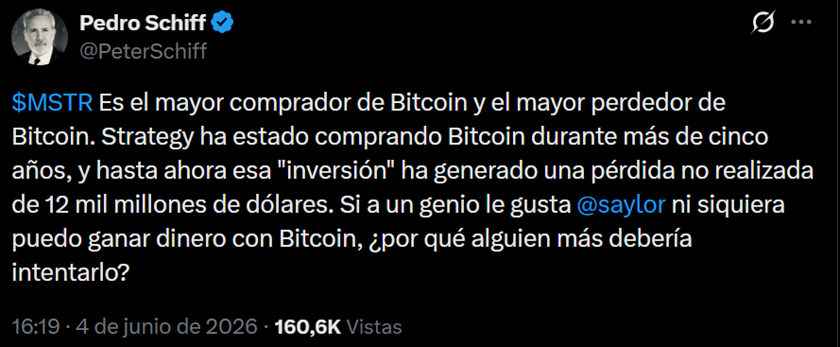
Critics also include Peter Schiffa well-known gold advocate, who has repeatedly questioned Strategy’s model and warned against the risks associated with the concentration of large amounts of bitcoin into a single corporate entity.
Other observers, such as the analyst Laurent Pignotmaintain that the debate does not revolve around the volume sold, but rather to the precedent established by the operation. They argue that the strength of the narrative promoted by Saylor was based on the idea of not selling bitcoin, so any exception may raise doubts about future liquidity needs.
For now, beyond the specific case, the market continues to show two simultaneous forces: the progressive exit of supply from the first holders and the entry of institutional demand. The relationship between the two remains subject to interpretation and there is no clear consensus on their net effect on price developments.