The US Senate voted Friday morning to provide an additional $70 billion (about €60 billion) to the Department of Homeland Security (DHS) for immigration enforcement.
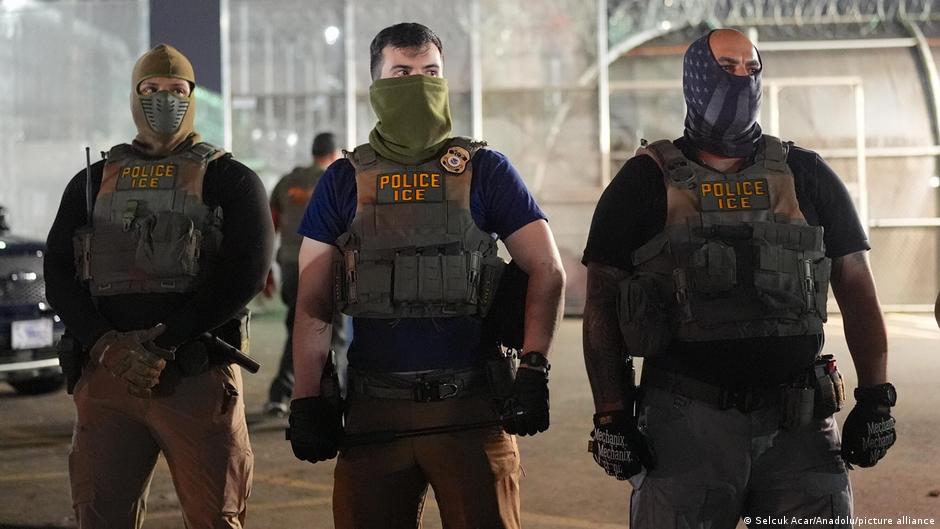
The bill provides three years of funding for the US Border Patrol and what has become the largest and best-funded federal law enforcement agency in US history under President Donald Trump, Immigration and Customs Enforcement, commonly known by its acronym ICE.
The expansion of ICE powers and personnel in Trump’s second term has been a source of friction and public opposition.
What happened in the Senate?
Senators voted 52-47 in favor of the bill, with no support from Democrats. One Republican opposed it.
The money provided by the bill will help pay for Trump’s controversial migrant deportation crackdown over the next three years.
The bill follows a partial shutdown of DHS earlier this year after Democrats refused to support new funding for immigration enforcement without restrictions on tactics such as raids at sensitive locations and the use of masks by officers.
Republicans rejected those demands, instead opting to fund ICE and Border Patrol through the fast-track “budget reconciliation” process, which allows them to bypass Democratic opposition if they can keep their own members united.
Voting took place only in the early hours of Friday morning as Thursday’s session dragged on with a series of secondary debates and controversies.
What unrelated issues were also involved in the lengthy Senate debate?
Dissatisfaction with a $1.8 billion so-called “anti-weapons” fund, which could compensate Trump’s associates for allegations they were abused by the government, played a big role in the marathon session.
Senate Republican leader John Thune said the funding was a “settled issue”, citing Attorney General Todd Blanch’s testimony in Congress that the Justice Department would not move forward with it.
Although Trump told reporters on Wednesday, “I like it. I think it’s very important,” some senators were not satisfied that it was left in place.
Thune tried to argue that the matter had been settled.
Thune told reporters, “I find it very hard to believe that they’re going to present someone who sat in front of a committee in the House and made definitive statements about this and then somehow suddenly turn around and turn on them.” “I don’t think that’s going to happen.”
A rival bill from Democrat Senate Minority Leader Chuck Schumer to eliminate anti-weapon funding won support solely from a trio of Republicans – Susan Collins, Jon Husted and Dan Sullivan – and stalled the session on a largely procedural note for several hours.
The debate in the lavish White House ballroom also discussed proposals to curb the use of federal funds and even private donations that Trump often champions, which critics say is over budget and behind schedule.
With Trump’s approval ratings declining amid the war in Iran and midterm elections looming in November, when a third of senators will face election, many of the president’s policies have prompted criticism within Republican ranks.
These include, but are not limited to, the seemingly sidelined anti-arms fund, the ballroom, and the nomination of political ally Bill Pulte as US intelligence chief despite his background in business and real estate.
what happens next?
The bill still needs to pass the House of Representatives, the lower house of Congress.
Republicans hope the vote could be finalized as early as next week. The bill will then return to the White House for Trump’s signature.
Don’t let algorithms hide news. If you rely on our team for reliable reporting, please take a moment to choose us as your Preferred Source on Google by Clicking Here And press the “Star” or “Favorite” button, so you always see our verified news first.
edited by: Sam Dusan Inayatullah