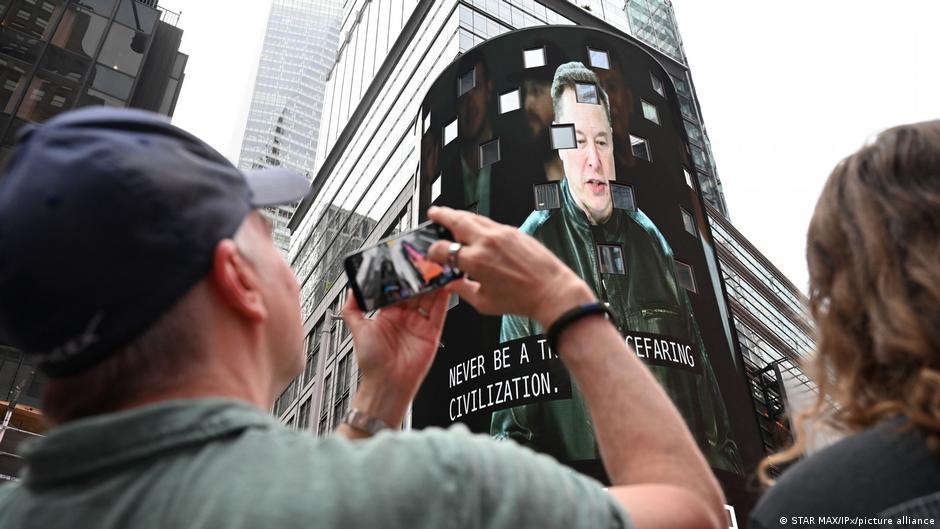
Elon Musk on Friday became the world’s first trillionaire after the stock market debut of his SpaceX aerospace and artificial intelligence (AI) firm.
Within hours of the initial public offering (IPO) on Nasdaq, shares soared well above their initial price of $135 (about €117).
According to Forbes magazine, shares closed more than 19% higher at about $161 at the end of the first day of trading, valuing SpaceX at about $2.1 trillion and giving Musk an estimated net worth of about $1.1 trillion.
At one point shortly after 1 p.m. (1700 GMT/UTC) in New York, shares were hovering around $173, an increase of about 28%, equating to a market capitalization of about $2.26 trillion for the Texas-based space and satellite company, before falling slightly again by the end of the day.
This valuation makes Musk the first person in history to have a trillion-dollar fortune, at least on paper — primarily through his stakes in SpaceX and electric car maker Tesla.
How much money was raised from the record IPO?
SpaceX sold about 555.6 million shares at the issue price of $135, raising its target by $75 billion in the process.
It was easily the most lucrative IPO in history, surpassing the nearly $29 billion raised by Saudi Arabian oil giant Aramco in 2019.
Musk, joining via videolink from a ceremonial bell ringing at Starbase, SpaceX’s South Texas home, on Friday, said the company is going public now because it needs funding to meet goals like launching more satellites and even data centers into space.
He reiterated his goal to “make life multi-planetary.”
“Not just some astronauts, I mean really you,” Musk said. “Whatever way you look at it, SpaceX wants to be able to take you to the Moon, take you to Mars, and ultimately beyond.”
How does SpaceX’s market cap match its revenues and profits (or losses)?
Unlike Musk’s other cash cow, Tesla, it’s not immediately clear why SpaceX can command such a high valuation from investors.
The South African’s own celebrity and success as a hype man, coupled with the company’s future performance potential, plays a bigger role in valuation than current fundamentals.
Last year, SpaceX had revenue of $18.7 billion, and it had a net loss of $4.9 billion on big investments in AI and other projects.
Therefore, Friday’s market capitalization valuation is more than a century worth the company’s current revenues. By comparison, struggling Volkswagen’s market capitalization of €48.46 billion represents less than two months of the carmaker’s revenue.
In other words, Volkswagen Group generates more revenue in a fortnight than SpaceX in a year – at a profit, not a loss – and yet it is valued by investors at less than 40 times that.
As far as profits are concerned, SpaceX has not recorded a net profit in any calendar year. But similar issues did little to slow the stratospheric rise in Tesla shares in recent years.
SpaceX is now one of the most valuable US businesses, trailing only Nvidia, Apple, Google parent Alphabet, Microsoft and Amazon. Tesla is valued at $1.26 trillion by market capitalization, even though it has finally started making regular profits.
Nvidia, fueled by the AI boom, is currently in a league of its own in the overall nominal valuation league tables, valued by investors at around $5 trillion.
Don’t let algorithms hide news. If you trust our team for reliable reporting, please take a moment to select us as your preferred source on Google By clicking here and pressing the “Star” or “Favorite” buttonThat’s why you’ll always see our verified news first.
Edited by: Sean Sinico and Carl Sexton