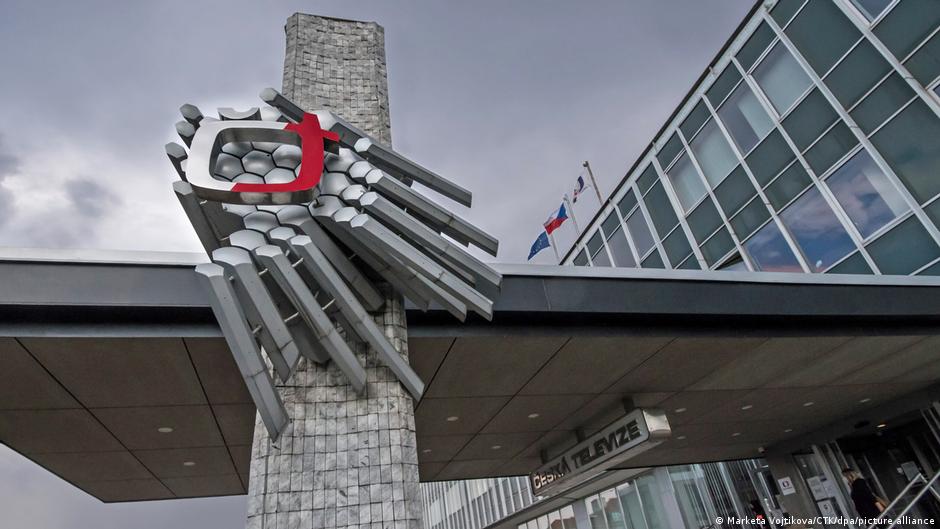
In their campaign before last autumn’s elections, the populist and far-right parties that now form Czechia’s coalition government promised to reform Czech Television (CT) and Czech Radio (CRO).
On June 15, the Cabinet kept this promise by approving the related bill.
If approved by both houses of parliament and signed by the president, the law will eliminate the current license fee from next year, which costs households and businesses the equivalent of €8.50 ($9.75) per month, and the funding of both outlets will be transferred to the state budget.
Prime Minister Andrej Babis, a populist centrist billionaire, insists that the new model will be fair, eliminating the “flat tax” that demands poor families – not coincidentally the core of his voters – pay the same as anyone else.
He also said it will pursue CTs and CROs to improve efficiency.
“Public broadcasters are not making any cost savings and no one controls them,” he told a news conference.
‘Cultural barbarity’
After 17 years of tussle, the previous government finally increased the license fee last year.
Under the current government plan, each outlet’s annual budget will return to the level it was before the increase. This would reduce CT’s 2027 budget by approximately €41 million to €237 million, while CRo would have to make do with €16 million less, or €85 million.
Directors of both outlets warned that “shocking” budget cuts would lead to mass layoffs and limit programming and broadcasting to regions and special interests.
CT and CRO have been cut despite enjoying the highest level of public trust of any Czech outlet, as well as being one of the most trusted public service media organizations in Central and Eastern Europe and the organizations with the largest audience reach.
“In this context,” said Dr. Václav Stetka at the European New School of Digital Studies, “the dramatic budget cuts represent an act of cultural barbarism.”
european trend
Defending the plan, the government says it is merely joining the majority in the EU.
Otto Klempir, the former funk musician installed as culture minister by the radical right-wing Motorists for Themselves party, declared, “Most EU states have already abandoned this outdated financing method.”
While it is true that many European countries – including France, Spain and the Scandinavian states – have moved away from the license fee model, experts suggest the comparison is not as straightforward as ministers suggest.
This is what researchers from Charles University in Prague say “A change in funding from the state budget will not eliminate unfairness in terms of payment levels […]Because they depend on the structure of the tax system.”
Stetka said the political culture in post-communist states is another factor: “In this region,” he told DW, “the political elite has never accepted the independence of public media.”
no security measures
Researchers at Charles University suggest that the direct funding model can “work relatively effectively” in countries with a high level of political consensus, stable political culture, and high respect for the independence of public service media.
The check bill now going to Parliament shows little evidence that such conditions exist.
Many European states that have moved toward government funding have created checks and balances in the first place to avoid political interference, Statka says.
But CRO director René Zvoral warned that after Klempir’s initial attempt to draft a bill was canceled amid criticism that it was rushed and poorly written, the government now plans only to adapt existing law and contain no such safeguards.
‘Destructive for democracy’
This, Zevoral claimed, shows that government pressure is motivated not by a desire to save money but by eliminating the maximum autonomy guarantees provided by the existing system.
Media watchdogs, analysts and the political opposition universally agree that the funding switch would be a clear threat to the independence of Czechia’s public service media.
This concern has been heightened by state capture of public service media by the governments of nearby Hungary, Poland, and Slovakia over the past decade.
Vit Rakusson, leader of the opposition STAN party, labeled the proposal a “de facto nationalization” of public media and warned that it would be “devastating for the quality of democracy”.
“The Czech government has begun to financially blackmail public service media,” Pavol Szalai, director of the Prague bureau of Reporters Without Borders, told DW. He warned that the move sets the stage for “unfair.” [political] Interference.”
The government denies it wants to intervene
The government strongly rejects such warnings.
Upon receiving the bill, Babis said, “We have never threatened the independence of Czech television and we will not do so.”
However, the Prime Minister has a history when it comes to CT, having sought to gain control over its Governing Council during his 2017-21 tenure as Prime Minister.
Babis’s ANO party and the far-right coalition partner SPD have long accused the broadcaster of unfair coverage, censorship and spreading “Brussels propaganda”.
Referring to her recent study on public service media in Czechia, Marina Urbaníkova of Masaryk University in Brno confirmed to DW that both parties perceive public media as biased against them.
Anticipation of heavy opposition
still gave Almost 60% of Czechs say they trust CT and CROIt seems that there is going to be huge opposition to this plan.
The student-led civil society movement Million Moments for Democracy has organized several protests, the largest of which saw approximately 200,000 people gather in Prague in March to protest the government’s course.
Another rally is going to be held on Sunday. The next day, CT and CRO employees — many of whom have told DW of growing political pressure in recent months — will go on strike.
Opposition to the government scheme is not entirely new: twenty-five years ago, weeks of industrial action and public anger forced the then government to back down from its attempt to seize control of the outlet.
A petition organized by Million Moments has already been signed by more than 500,000 people, and the civil society group says it will continue its protests until “politicians withdraw the controversial law.”
Edited by: Angiel Flanagan