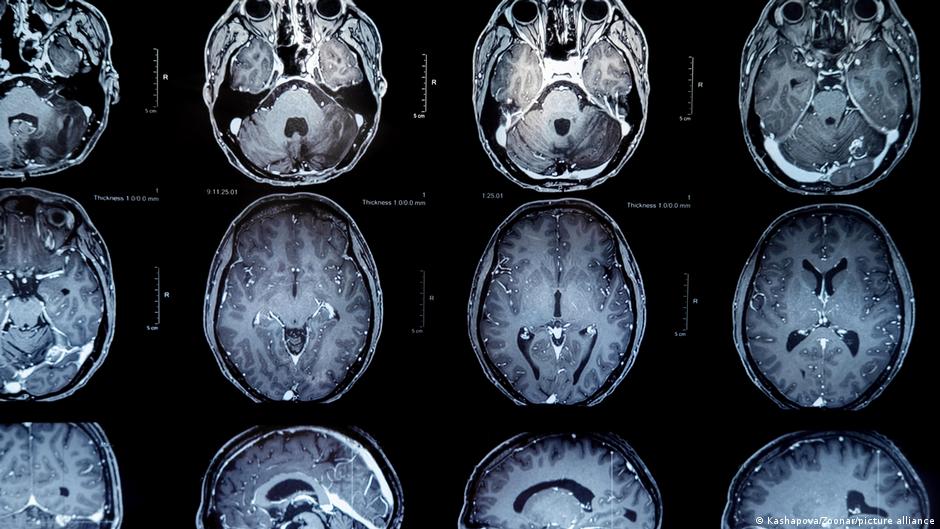
Brain tumors are difficult to treat. Because even tumors that can be operated on can rarely be completely removed through surgery. Patients usually receive chemotherapy and radiation therapy but even so, people with aggressive tumors often do not survive more than five years after diagnosis.
In A study by researchers At the German Cancer Research Center, University Medical Center Mannheim, Heidelberg University Hospital and other research institutions, 33 patients were also vaccinated.
Eight years later, the research team published Long-term follow-up results in the journal Nature. And there is reason for cautious optimism: 66% of study participants were still alive after eight years. In 42% of participants, the tumors did not grow back during that time.
One of the study’s lead authors, Michael Platten, director of the department of neurology at the University Medical Center Mannheim and head of a research division at the German Cancer Research Center, said he was particularly surprised that tumors did not regress in such a large proportion of patients over such a long period of time.
Vaccine against brain tumors does not prevent cancer
Whether for measles, mumps or COVID-19 – vaccines are known as a preventive measure that helps protect us from a particular disease or trains the immune system to make the disease less severe. These are known as preventive vaccines.
In contrast, therapeutic vaccines are designed to destroy tumors by activating the immune system. In the case of the therapy developed by Platten and his team, the vaccine targets only a genetic mutation found in certain brain tumors. All 33 participants had high-grade astrocytomas, meaning they had aggressive tumors in the brain that had a high risk of returning after treatment.
Vaccine trains the immune system to fight tumor cells
Astrocytomas are one of the most common tumors of the central nervous system, which includes the brain and spinal cord. They are divided into four categories from less aggressive to highly aggressive. Grade three and four astrocytomas share a specific genetic mutation that the researchers targeted with their vaccine.
“A similar genetic error causes a specific amino acid to be substituted in the IDH1 enzyme,” the German Cancer Research Center said. stated in a press release. “This results in the formation of a novel protein structure – a so-called neoepitope. What makes it special is that, on the one hand, the neoepitope stimulates tumor growth – and, at the same time, it is recognized as foreign by the patient’s immune system, making it an ideal target for immunotherapy.”
The vaccine tested in the study activated the immune system in two ways: It produced T cells that directly attacked abnormal cells and B cells that produced antibodies against the tumor. The goal, Platten said, is to “prevent the tumor from returning after full treatment, in this case radiochemotherapy.”
Ulrich Herlinger is director of neuro-oncology at the University Hospital Bonn and was not involved in the study. He sees his colleagues’ work as a real opportunity for patients.
“High-grade astrocytomas have almost a 100% chance of returning, growing, and ultimately becoming untreatable,” Herlinger said. Researchers don’t know what causes these tumors. “Nobody knows why it affects this particular person,” the cancer researcher said.
That’s why Platten’s research gives him hope: “If we can keep the immune system permanently activated, this will hopefully come with the hope of suppressing tumors in the long term.”
Follow-up study to begin in 2027
However, Herlinger joined study author Platten in urging caution about overinterpreting the data: “You can’t draw strong conclusions from 33 patients,” he says. The next step should be a controlled, randomized study, Herlinger said.
Such a study is already being planned: The project with more than 200 patients will start in March 2027, Platten said. “By today, we’re talking about a period of nine years before we would actually get reliable results from the study.”
Only then will it become clear how effective the vaccine really is and whether booster shots can further strengthen the immune response. Still, Platten says, the current study is cause for cautious optimism. Hope, he said, is something people can never have too much of.
This article was originally published in German