Two separate reports, one published recently the new York Times and by another Haaretzhas reignited debate on Israel’s thinking regarding regime change in Iran.
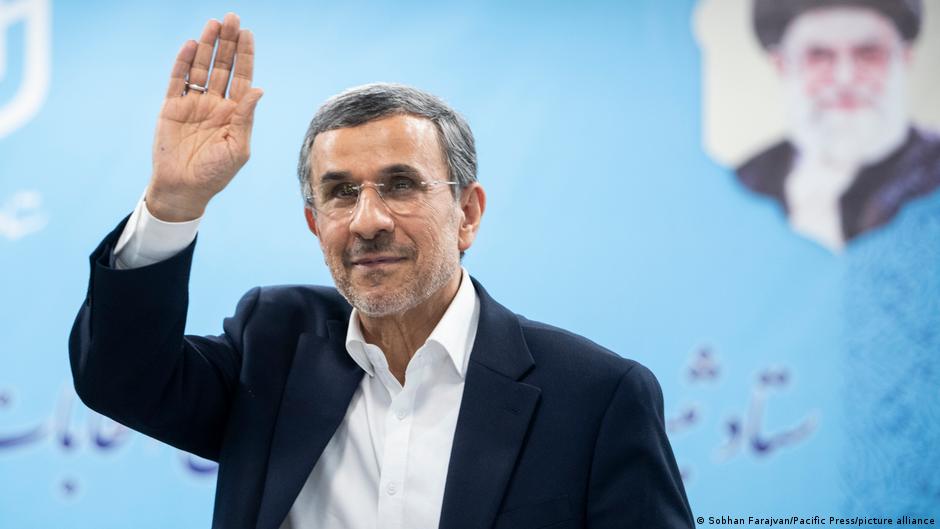
He also raised questions about the place of ultraconservative former President Mahmoud Ahmadinejad – who served two terms from 2005 to 2013 – in Iranian politics.
According to reports, Israeli officials may have explored the possibility of installing Ahmadinejad as a potential head of state in a post-Islamic Republic scenario, an effort that reportedly intensified during the war and included covert contacts in Hungary.
The reports have attracted attention partly because of their sensational details.
He claims he was taken to a safe house after Ahmadinejad’s compound was hit in an Israeli airstrike on February 28, 2026, and that David Barnia, the former head of Israel’s Mossad intelligence service, personally witnessed part of the contact effort, including an alleged meeting in Budapest.
Haaretz also wrote that the operation went far beyond Ahmadinejad, including plans for infiltration inside Iran, contacts with minority groups, and discussion of a broader destabilization strategy.
Former leader of Iran denied these reports
Details have not been independently verified and are unconfirmed. Ahmadinejad’s office has reportedly rejected the claims, calling them “absurd” and “completely false”.
Nevertheless, the reports are politically significant.
Babak Dorbeki, a London-based political analyst and former official at Iran’s Center for Strategic Research, told DW that the first task is to separate out three separate questions: the accuracy of the reporting, Ahmadinejad’s actual place in Iranian politics and the political act of publishing such a story.
He said, “There is no public and independent evidence that can conclusively confirm or deny the details of this narrative.” “Therefore it can neither be accepted without question nor rejected merely because it has been rejected.”
Dorbecki argues that Ahmadinejad still has some social base and unquenchable political ambition, but this should not be confused with real power.
In their view, the former president has been isolated from the core institutions of the Islamic Republic since approximately 2010, including the Office of the Supreme Leader, the Islamic Revolutionary Guard Corps (IRGC), the Guardian Council, and most of the conservative camp.
Who benefits from the story?
Ahmadinejad’s repeated disqualification in recent presidential elections shows that the formal power structure has no interest in restoring him to the center of decision-making, Dorbachy said.
That is why, in Dorbachy’s reading, the reports should not be understood merely as an attempt to promote Ahmadinejad as a future ruler. He said, “Even if we assume the reporting is correct, at most it shows that at one point he was one of the options under consideration, not that he is going to return to power.”
For them, the more revealing question is who benefits from such a narrative. One possibility, he said, is that parts of the Iranian state could use it to reinforce the idea that a former president was also vulnerable to foreign intrusion, which would help justify tighter security measures and a deeper climate of suspicion.
Secondly, Ahmadinejad’s critics could use it to strengthen their argument that his political legacy has always been costly for Iran.
And for Israel, Dorbachy said, the publication of such a story could serve an intelligence purpose by indicating Iran’s reach, access, and ability to create distrust and paranoia inside Iran, whether every operational detail is accurate or not.
Was it part of broader information?
Wahid Herouabadi, a former Europe-based Shia cleric and now critic of the Islamic Republic, told DW that outside powers seeking regime change usually look for people with mobilization capabilities.
But he doesn’t think Ahmadinejad is suitable for that role in today’s Iran. “The people who can play a role in Iran’s present or future are people associated with the IRGC,” he said. “Because Ahmadinejad no longer has those connections and doesn’t have that support, he can’t really act as a decisive political player.”
Heroabadi, who says he was once close to Ahmadinejad’s administration, argues that even in the event of a collapse, foreign governments would be unlikely to trust such a well-known and polarizing populist.
In his view, Ahmadinejad is neither a credible bridge to the Iranian public nor to a security-backed change that would matter in practice.
Media reports about the former president, nevertheless, reveal something about the now widespread information war around Iran, about the narratives that intelligence services want to present and how outside actors imagine post-Islamic Republic scenarios, even if they are far from political reality.
They show the extent to which the conflict over Iran has become a conflict over narratives and perceptions. In that fight, even an unbelievable story can be useful if it unsettles enough people.
Edited by: Srinivas Majumdaru