Trump’s executive order seeks to eliminate “excessively burdensome and fragmented” regulations.
The head of each financial regulator will need to conduct a review of existing provisions.
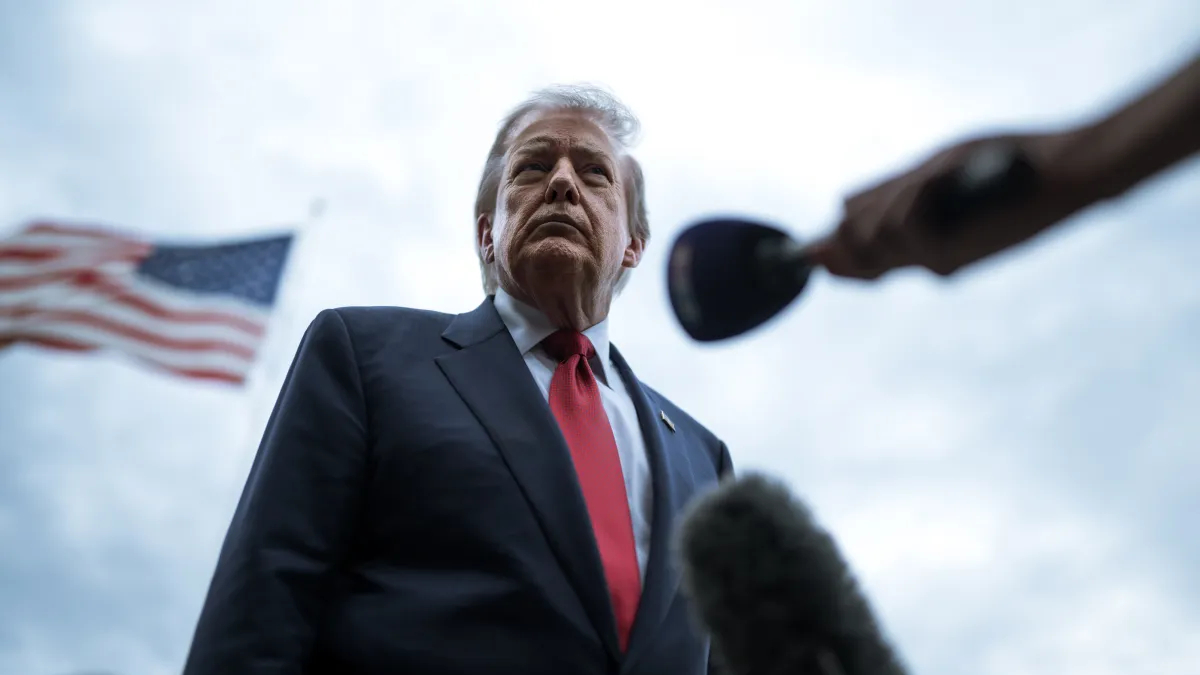
US President Donald Trump signed an executive order aimed at restructuring the country’s regulatory environment to enable the direct incorporation of distributed ledger technology and the use of bitcoin, along with other digital assets, into traditional financial services and national payment systems.
The government decree, signed on Tuesday, May 19, 2026, requires the main federal financial regulators to evaluate and modify current processes, focusing on the removal of operational and administrative obstacles that affect financial technology companies, known as fintech.
According to the official document published by the White House, the initiative responds to the need to maintain the global technological leadership of the North American nation in the face of the accelerated development of financial solutions based on the digital environment.
The president described the current regulations as “excessively burdensome and fragmented,” arguing that they act as unjustified barriers to entry that They predominantly favor traditional banking institutions.
The measure establishes rigorous deadlines for federal agencies to carry out the requested structural reforms. In addition to the Securities and Exchange Commission (SEC) and the Commodity Futures Trading Commission (CFTC), the executive order requires comprehensive reviews to be issued to the Consumer Financial Protection Bureau (CFPB), the National Credit Union Administration (NCUA), the Federal Deposit Insurance Corporation (FDIC), and the Office of the Comptroller of the Currency (OCC).
Within a period of 90 days, the directors of each supervisory body must complete a thorough analysis of their internal regulations and guides with the purpose of identifying redundant provisions that prevent strategic alliances between the entities. fintech and commercial banks or that hinder the obtaining of federal custody, insurance and brokerage licenses.
Subsequently, within a period of 120 days, the Board of Governors of the Federal Reserve System (FRB) is required to deliver a report ruling on the legal viability of grant direct access to cryptocurrency service providers and signatures fintech to the central bank’s payment accounts and real-time settlement networks.
Once the 180-day goal is met, financial regulators must have executed the definitive regulations resulting from the prior evaluation, aimed at boosting widespread economic competition.

The announcement of this decree occurs in a context of discussions in Congress, shortly after significant progress was reported in the Senate regarding the Clarity law project, which was approved in the Banking Committee of the Upper House on May 14, as reported by CriptoNoticias.
The approach of the White House through the executive order could operate as a strategic mechanism to accelerate changes in Washington’s bureaucratic apparatus before the final legislative text is approved. The above seeks to balance technological openness in payment methods with the essential requirements of legal security, institutional solvency and due consumer protection.
With the issuance of this presidential mandate, the US government plans to transform the operational architecture of Wall Street and traditional systems by relaxing entry requirements in the financial ecosystem.
The medium-term perspective points towards an integration that will redefine the mechanisms of custody, issuance and processing of collections under a unified digital scheme, decreasing market costs for cryptocurrency users in the United States territory.