
Hybrid custodians, direct settlement accounts, and BTC credit cards are possibilities.
Cryptocurrency companies with FinCEN MSB license will be able to openly partner with banks.
The new executive order issued by the White House transforms the rules of the financial game in the United States by mitigating bureaucratic fragmentation and ordering federal agencies to evaluate the direct integration of cryptocurrency companies, and financial technology firms (fintech), with the traditional banking system.
This measure, signed by President Donald Trump on May 19, 2026, seeks to eliminate regulatory barriers that, according to the text of the decree, “predominantly favor traditional banking institutions”, opening the way for the expansion of services based on digital currencies in the traditional financial sphere of that country.
The presidential order directly addresses the phenomenon known as “banking chokehold,” a historic situation in which cryptocurrency companies, such as digital asset exchanges, payment gateways, and bitcoin ATM operators, had their checking account applications denied by traditional commercial banks. under the argument of representing a “high risk.”
By ordering the review and elimination of provisions that prevent strategic alliances between the fintech and commercial banking, the decree rescues these firms from exclusion and allows them to compete under equal regulatory conditions.
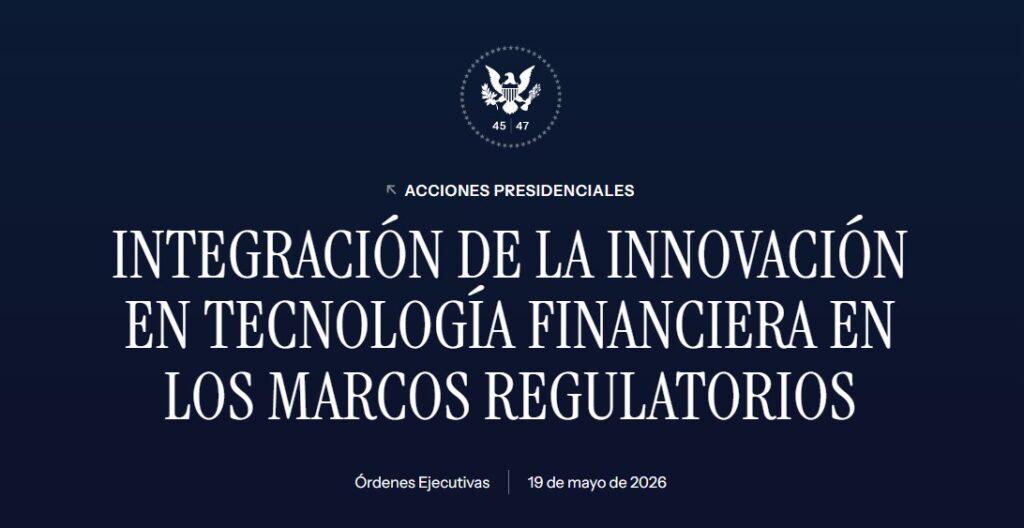
Now, what banking services with bitcoin and cryptocurrencies would emerge with Trump’s new order? Let’s see the possibilities
Hybrid Fund Custodians
The US executive order imposes strict deadlines for regulators to reconfigure the current framework for digital currencies. Within 90 days, the Federal Deposit Insurance Corporation (FDIC) and the Office of the Comptroller of the Currency (OCC) must review the custody licenses.
This provision could pave the way for hybrid custodians, where traditional banks would offer checking accounts with bitcoin embedded and backed by institutional insurance analogous to regular deposits.
Likewise, the National Credit Union Administration (NCUA) could incorporate services for local cooperatives, empowering them to issue loans collateralized in cryptoassets, as well as native debit cards.
On the other hand, the Federal Reserve (FED) received a 120-day mandate to evaluate the direct connectivity of companies providing digital asset services to the central bank’s payment accounts. This would allow cryptocurrency platforms to use the infrastructure of real-time settlement networks such as the ACH or FedWire system.
In general, by eliminating dependence on intermediary correspondent banks, operating costs would be reduced to a fraction and instant transfers between bitcoin, cryptocurrencies and US dollars would be enabled for users across the country.
In turn, the new financial ecosystem would include unified payment gateways under the supervision of the Consumer Financial Protection Bureau (CFPB). The objective of this digital scheme would be to reduce transaction costs through point-of-sale terminals in which businesses process payments with bitcoin. with the same simplicity and low fees that characterize local debit cards.
Additionally, regulatory unification at the federal level would replace the process of processing individual money transmission licenses in each of the 50 states, saving millions of dollars in regulatory compliance costs. for the large platforms in the digital assets sector.
On the other hand, the elimination of friction between bitcoin collateral and traditional payment systems would massively accelerate the use of collateralized credit cards.
Through this immediate financing mechanism, users would deposit their digital currency holdings into a secure hybrid custody account and the system would automatically grant a line of credit in dollars or stablecoins to mitigate the effects of market volatility.
When making everyday purchases with the card, the infrastructure would process an automatic loan in milliseconds, keeping the digital asset intact on the network to preserve its long-term bullish exposure.
This guaranteed credit model would offer significant financial advantages compared to conventional banking. From a tax perspective in the United States, applying for a loan backed by digital assets is not considered a sale, so legally would not generate capital gains taxes unlike direct settlement of digital currencies.
Additionally, access to the line of credit dispenses with the user’s traditional credit history or Fico Score, since the payment capacity is 100% guaranteed by the mathematical collateral deposited in the decentralized network.
However, the volatility of BTC and cryptocurrencies represents a critical factor. In the event of a sudden drop in the price of bitcoin, if the value of the collateral decreases below established security limits, the platforms could execute margin calls and automatic liquidations. This would involve the forced sale of a fraction of the escrow funds to pay off the balance of the outstanding debt.
Regardless, the maturation of these tools and direct access to the Federal Reserve would reduce interest costs to minimal levels, transforming what was a niche service into a common option for everyday banking in the United States.
Impact on money services companies
Beyond the above, Trump’s executive order has implications for companies that hold money services business (MSB) licenses. For these companies, where cryptocurrency exchanges, remittance platforms, bitcoin ATMs and payment gateways come in, this executive order changes the rules of the game completely.
Overall, Trump’s executive order rescues MSBs from regulatory limbo and gives them the right to compete head-to-head with Wall Street. It removes their bureaucratic chains, but throws them into an open market where traditional banks now have explicit permission to fight for their clients.
CriptoNoticias spoke with Ami Spiwak, co-founder of the Qash digital dollar neobank, which is precisely licensed as such. In his opinion, the order benefits the MSB because it gives more confidence to the user.
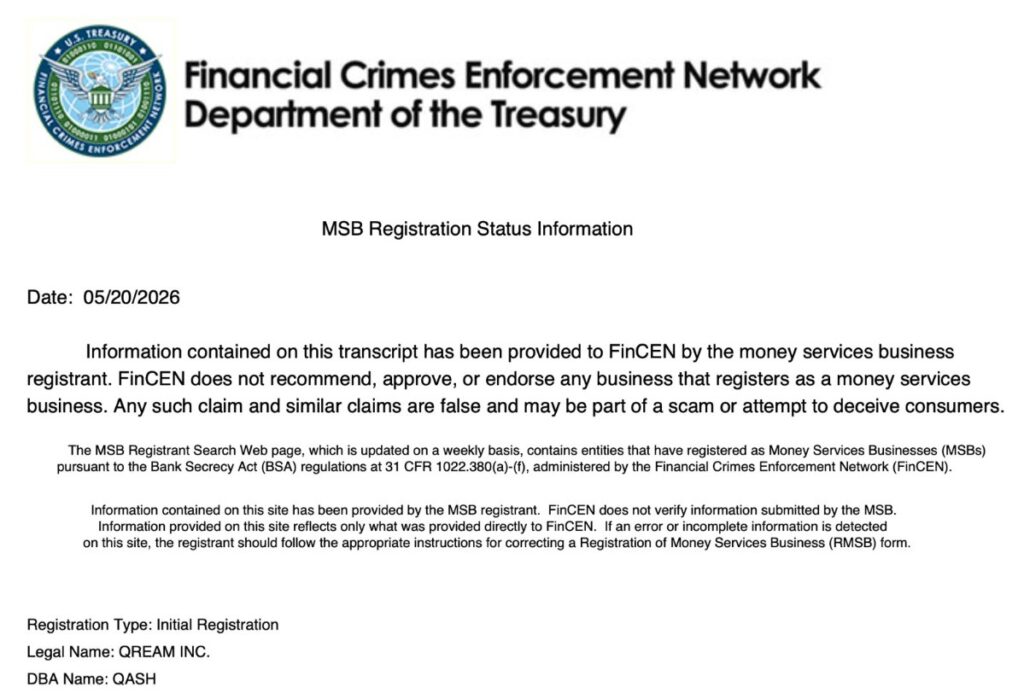
«Beyond providing specific products that may go on the market, they generate trust. Because the end user, who often doesn’t know much about crypto, frankly, isn’t even interested. He’s interested in what he can do with it. (…) To the extent that regulatory clarity creates confidence for adoption, it is positive,” Spiwak pointed out.
From their perspective, the true value of these government orders lies in shifting the focus of the technical debate towards the functional utility of digital assets for the common citizen.
Spiwak was emphatic in pointing out that among the benefits for companies with an MSB license, the offering of credit cards collateralized in BTC and digital assets stands out.
«That will undoubtedly happen and it will be very beneficial. In other words, I believe that the wave that is coming throughout the crypto world is around credit and that is going to be a very big advance. Just as there are already cards collateralized with stablecoins, they will surely arrive in bitcoin,” said Spiwak.
With Trump’s executive order, it is clear that the range of banking services with bitcoin in the United States is opening up like never before. By eliminating friction, you will have the freedom to operate with digital assets on traditional financial rails, translating into greater usability and consequent adoption of the sector. Above all, in the field of clients, who already know cryptocurrencies and their advantages over the legacy financial system.