
There is a change in sentiment among investors, from bearish to bullish.
The funds have consolidated three consecutive weeks of positive flows.
The price of bitcoin (BTC) once again surpassed the $76,000 mark yesterday afternoon, April 20, driven—among other factors—by a streak of five consecutive days of capital inflows into exchange-traded funds (ETFs) operating in the United States.
Between April 14 and 20, these investment vehicles accumulated a total of 1.5 billion dollars in capital inflows.
The following graph, provided by the SosoValue platform, shows the flow of capital to and from bitcoin ETFs, day by day, between January and April 2026:
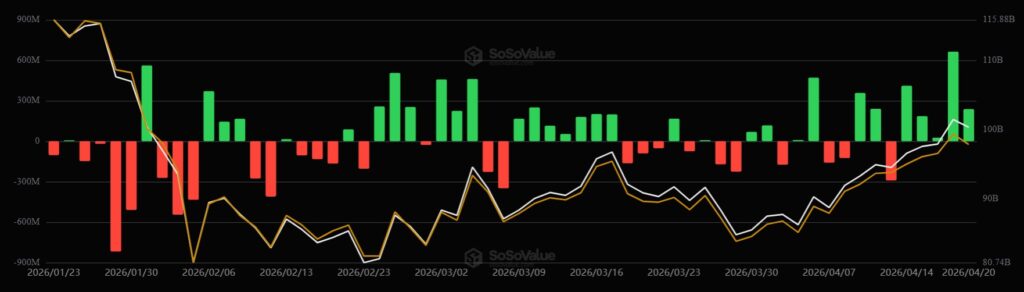
During the trading day yesterday, April 20, the funds obtained a positive balance of 238 million dollars. In this scenario, the role of the iShares Bitcoin Trust (IBIT) stood out, managed by the firm BlackRock, the largest asset manager in the world. Said fund alone captured $256 million in tickets. In this way, it offset the capital outflows recorded by the Fidelity Wise Origin Bitcoin Fund (FBTC) and Grayscale Bitcoin Trust (GBTC) during the same day.
The impact of these products on the price of bitcoin is direct due to their operating structure. ETF management companies are legally required to purchase and hold units of bitcoin in their treasuries to back each share they sell to the public. Therefore, When demand for ETF shares increases, firms must go to the market to acquire more assets.
This mechanism activates the fundamental law of supply and demand in the financial market. As there is a constant and massive purchase of bitcoin by investors, the available supply decreases, which causes the price of the digital currency to rise organically.
As reported by CriptoNoticias, this positive behavior represents the highest weekly income level for these instruments since last January. With these results, the funds consolidate three consecutive weeks of positive flows. This uninterrupted accumulation streak reflects a change in market sentiment, where institutional investors have moved from caution to a phase of constant exposure.