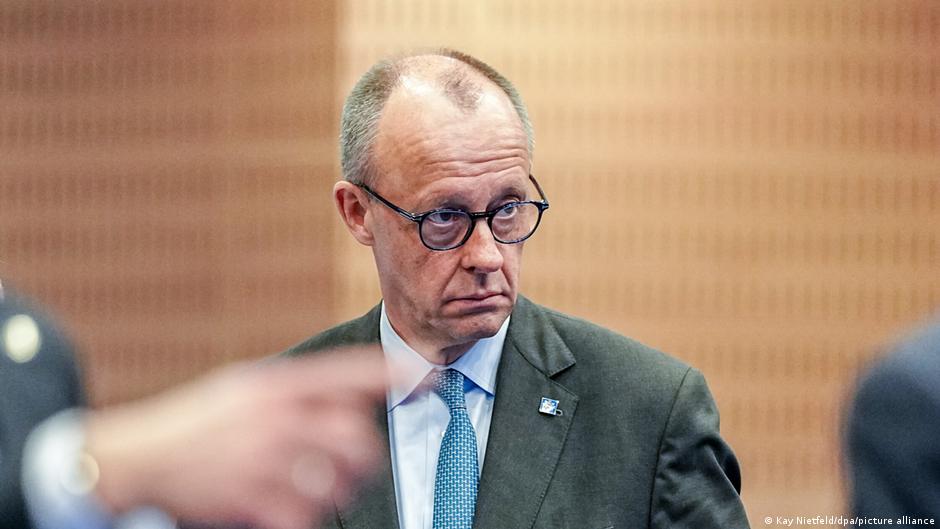
Chancellor Friedrich Merz, under pressure to reform Germany’s costly health care system, announced that what he called a “historic” health care draft law had been agreed to by his Cabinet on Wednesday morning.
The package, designed to curb rising health insurance premiums, must still pass through the German Bundestag, where it is expected to come under intense scrutiny from lawmakers.
Merz’s centre-right Christian Democratic Union (CDU) is governing the country in a fractious coalition with the centre-left Social Democratic Party (SPD), and there have been reports of angry altercations at coalition meetings (which Merz denies). Merz is also struggling with historically poor approval ratings, with a recent poll showing he is the most unpopular democratically elected leader anywhere in the world.
But introducing the new legislation on Wednesday, Merz stressed that the agreement reached that morning shows that “we are able to make compromises, and we negotiate them, even if things get a little shaky at times.”
Lars Klingbiel, the SPD leader and finance minister, made similar comments: “Of course, we have discussions from time to time – even heated discussions,” he said at his press conference. “But as today’s example shows, we are willing and able to act.”
“This health insurance reform represents one of the most significant welfare state reforms of recent decades,” Merz said. “By saving more than €16 billion, we are preventing premiums from rising for people with state health insurance.”
Main elements of reform
“The government showed today that it can make the necessary reforms in a quick time,” Health Minister Nina Warken said on Wednesday. “It was a very ambitious plan, it was a very big package. But the effort was worth it.” The new draft law was agreed upon just a month after a commission of experts presented 66 money-saving proposals to health care insurers.
Despite steadily rising health insurance contributions (Germans have seen a 3% increase this year alone), losses at Germany’s state health insurance companies are growing: at current rates of income and expenses, the gap between state insurers’ income and expenses will grow from €15.3 billion ($17.9 billion) in 2027 to €40.4 billion in 2030. The new law will attempt to rein in expenses by linking them to real income. of state insurers.
Sugar Tax: The plan calls for a new tax on sugary drinks from 2028. The estimated annual income, approximately €450 million per year, is to be reserved solely for prevention programs in the health care system, rather than being included in the federal budget.
Medicines will become more expensive: Prescription drugs are currently subsidized by insurers – in the future, people with health insurance will have to contribute more for prescribed drugs.
The state will take over health insurance for the unemployed: Until now, state insurers covered the health care costs of people living on unemployment benefits. In the future, these costs, approximately €12 billion per year, will gradually be covered directly by the federal government.
Partial abolition of premium-free insurance for domestic partners: A 2.5% premium is to be introduced for non-working partners. Exceptions include families with children under the age of seven and parents of children with severe disabilities, as well as family caregivers, retirees, spouses, and domestic partners with complete loss of earning capacity.
Cannabis and homeopathy no longer covered: The draft law specifies that “cannabis flower” and homeopathic remedies will be excluded from health insurance coverage.
Additional Deduction: Administrative and advertising expenses of statutory health insurance companies will be cut. Additionally, compensation limits will be set for officials of health insurance companies, state associations, medical services and physicians’ associations.
Reform or austerity programme?
But although the government stressed that the proposals agreed in the draft law came after consultation with experts in various economic and medical fields, the announcement of the plans this week faced some criticism.
Speaking at a press conference on Tuesday, Klaus Reinhardt, president of the German Medical Association, said the package was not the historic reform plan that Merz had claimed, but rather a series of savings measures. “This is the biggest savings package in the last few decades, that’s true,” he said. “These are burdens that are being unilaterally borne by the insured.” At the same time, Reinhardt acknowledged the urgent need for reforms and the reality of the economic conditions that made them necessary.
Other reactions have been equally harsh. “The federal government is selling this reform as a way to stabilize premiums,” said Verena Bentelle, president of the VDK association, which lobbies for a stronger welfare state. “In reality, this is an austerity program at the expense of the insured. To achieve this, benefits are being cut and an even greater burden is being placed on the insured.”
“The real scandal of this reform is that it does not distribute resources fairly,” Bentley said. “It redistributes them downwards. It’s a predictable move in social policy.”
Eugen Brisch, president of the German Foundation for Patient Protection (DSP), an organization that protects patients’ rights, criticized the federal government’s reluctance to step in to help state insurers in particular.
“Federal funding is being cut, and only a small portion of the costs are being covered for basic income recipients,” he told DW in an email. “Therefore, there is no question of a balanced package or fair distribution of the burden. This imbalance falls entirely on the shoulders of the patients.”