When Western companies shift production from China or buy fewer parts from there to become less dependent on the country, it is called decoupling or de-risking.
And you would think that China couldn’t stop the rest of the world from falling apart, right? Tell this to Beijing.
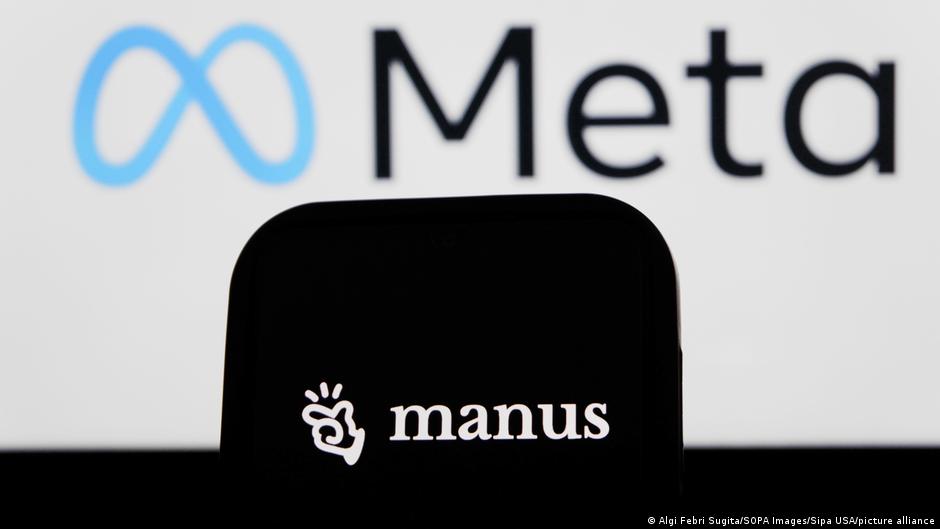
Chinese authorities last month blocked Meta’s $2 billion (€1.7 billion) acquisition of artificial intelligence (AI) startup Manus, in a clear signal that even deals structured outside China’s borders are no longer safe.
Manus is headquartered in Singapore, but has strong Chinese roots. China saw the company as one of its strategic assets in the global AI race and blocked the deal on national security grounds.
The move comes after Beijing stepped up enforcement of rules on industrial and supply chain security in April. These measures strengthen its ability to prevent US tech giants from purchasing high-end Chinese technologies.
New rules prevent ‘decoupling’
However, the consequences of the new rules are far more widespread. In practice, Beijing is warning foreign governments and companies against decoupling.
Chinese authorities can now retaliate against foreign firms that move factories to countries like Vietnam or India, or move production back home. They could also face fines and supply chain blacklisting if they comply with United States and European Union export controls or sanctions targeting Chinese entities.
“The aim is to effectively derail the de-risking measures that member states, including the EU and Germany, are taking to reduce dependence on China,” Rebecca Arcesati, an analyst at the Mercator Institute for China Studies (MERICS), told DW.
Since the pandemic, both the EU and the US have stepped up efforts to make supply chains more resilient and less dependent on China. Many foreign companies have reduced their operations there. Some production has been relocated closer to home.
Trade tensions between China and the West have been building for years, but US President Donald Trump’s aggressive new tariffs on Chinese goods in 2025 have significantly accelerated the change. Together, these disputes have led to a move away from globalization toward a more fragmented, block-based global trading system.
Europe hits back at sugar overproduction
Faced with repeated dumping of cheap Chinese goods – most recently electric vehicles (EVs) – flooding the European market as a result of Trump’s tariffs, the EU is taking increasingly concrete steps to better protect its trade with China.
In March, the European Commission, the EU’s executive branch, published details of the bloc’s Industrial Accelerator Act (IAA). Although it does not explicitly single out China, the IAA aims to cut Europe’s strategic dependence on Chinese goods and investments and counter unfair competition from Chinese rivals, which often benefit from heavy state subsidies.
This regulatory tug-of-war is putting multinationals – especially German carmakers – in a difficult position as companies like Volkswagen, BMW and Mercedes-Benz are eager to protect their substantial market share in China.
They also benefit from producing a large portion of their vehicles in China, which are then exported to other regions. At home, they face pressure to reduce reliance on Chinese components, as well as compete with rapidly emerging Chinese EV rivals.
Firms face an impossible balancing act
Jens Eskelund, president of the EU Chamber of Commerce in China, described Beijing’s new powers as an “additional regional toolbox” that will further increase “complexity in global trade.”
“You may have situations where companies are caught between regulatory measures being imposed in the US or Europe and China, where it is impossible to comply with all of them,” Esklund told DW.
There is anecdotal evidence that China is already pressuring foreign companies over its plans to shift some production to other countries, said Merix analyst Arsesati.
“China’s leaders have decided that the best way to ensure national leadership in this technology is to make China more self-reliant… and for the world to rely more on China for supply chains and technology,” he told DW.
Beijing has already shown its willingness to weaponize supply chains, tightening export controls on rare earth elements and other critical minerals. These materials are important for the production of EVs, defense systems and advanced electronics.
Chinese pressure to weaken IAA
Beijing is under increasing pressure on the EU to weaken the IAA. Several European countries with strong economic ties to Beijing, including Germany, are also urging a more cautious approach.
With the EU’s trade deficit with China set to reach a staggering €360 billion ($424 billion) in 2025, Brussels may struggle to maintain momentum, even as many analysts warn that Europe must urgently safeguard its industrial future.
“If I were a European policymaker, it would … double,” Alice García Herrero, chief economist for Asia Pacific at French investment bank Natixis, told DW. “If we continue to accept threats from China, we will have less and less space.”
Additional reporting by Clifford Coonan
Edited by: Andreas Becker