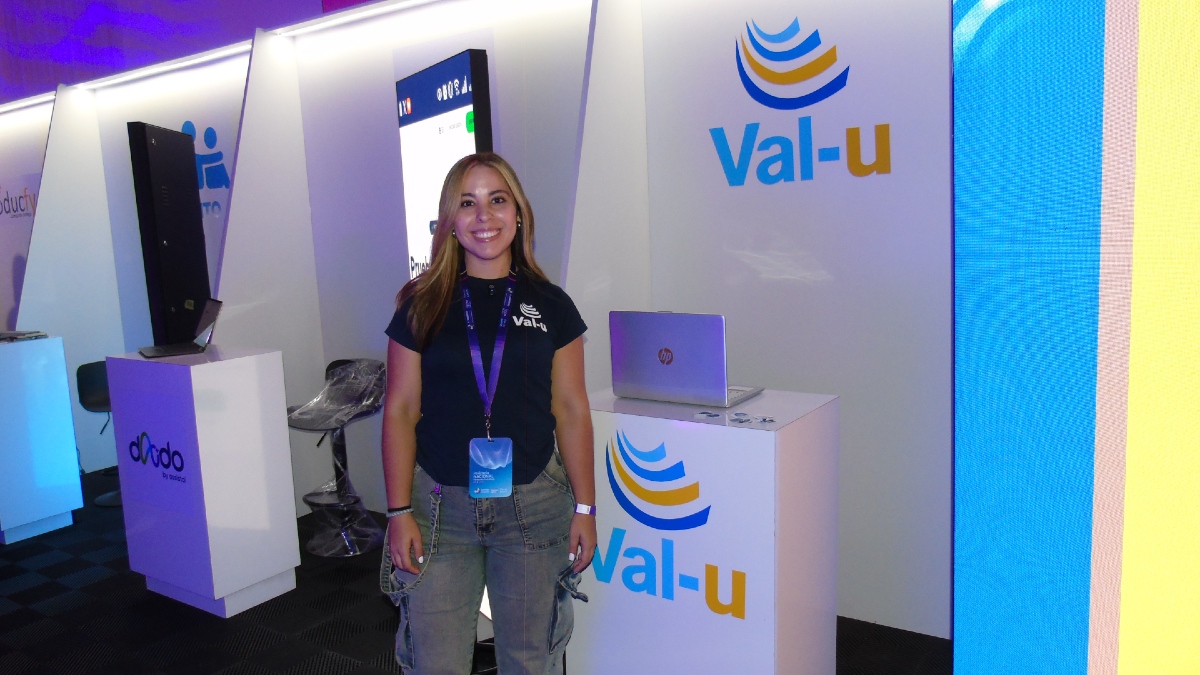
Villalonga believes that children have a “different approach” to the cryptocurrency ecosystem.
At Val-U they apply transversal teaching so that the little ones learn about finances.
The Venezuelan startup Val-U, dedicated to financial education, has managed to integrate learning about bitcoin (BTC) and the decentralized economy into the curriculum of more than 5,000 students in Venezuela and Mexico. Through a transversal methodology, the initiative seeks to protect the financial future of young people against inflation and the devaluation that affects the region.
In an exclusive interview with CriptoNoticias within the framework of the Venezuela Tech Week event, Dubraska Villalonga, CEO of Val-U, explained that the main objective is “to help schools in Venezuela and Mexico to give financial skills to both their teachers and their students.”
According to the executive, this learning has a “network impact” that reaches families and administrative stafftransforming your view on money.
According to Villalonga, Val-U’s proposal uses bitcoin as an axis for various subjects. He explained that “in the lower grades we work on topics more related to definitions, concepts, seeing how they associate them with other topics.”
As an example of this integration, the CEO pointed out: «We talk about cryptocurrencies in fifth and sixth grade but we associate it with natural numbers. “So we take the price of bitcoin and we start to separate what is a ten, what is a hundred, what is a tenth, what is a thousandth.”
For Villalonga, The importance of bitcoin in the Venezuelan context is indisputable. “It is necessary that as a result of our reality affected by inflation, a devaluation and the crisis that we have been suffering, we understand how these investment instruments allow us to protect ourselves from that inflation,” he stated.
In addition, he highlighted the value of the digital currency as a refuge of higher value than the local currency: “It also allows us to have a possibility of savings in a currency that is usually much more stable when you compare it with the bolivar.”
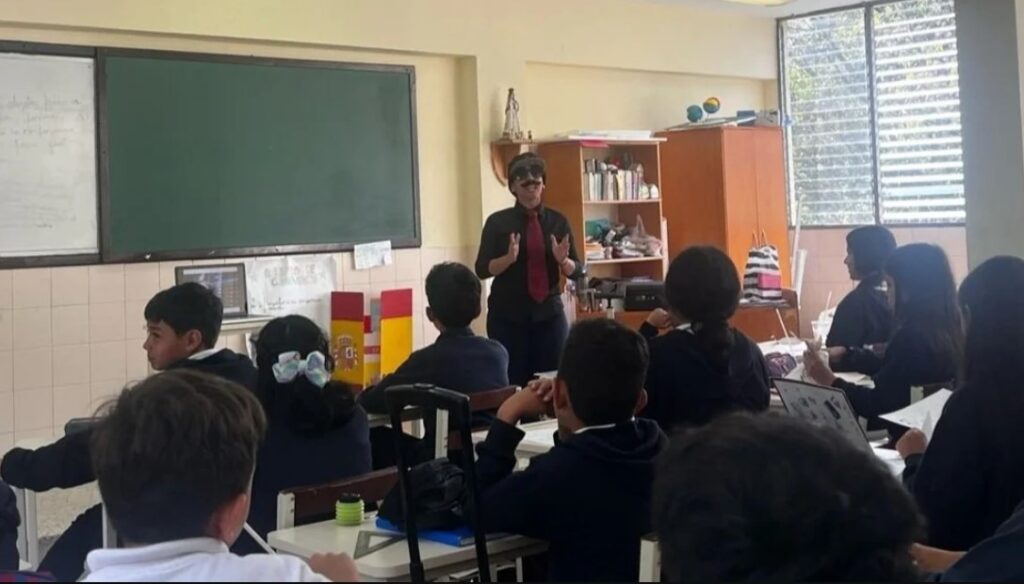
The Val-U program, which has reached around twenty schools, not only addresses the digital asset as an investment, but also its technological and philosophical background.
“We talked about the libertarian issue and what it also means to learn about cryptocurrencies and bitcoin as a tool to understand that the State has certain parameters and that this falls outside the norm of what the traditional financial system represents,” Villalonga explained.
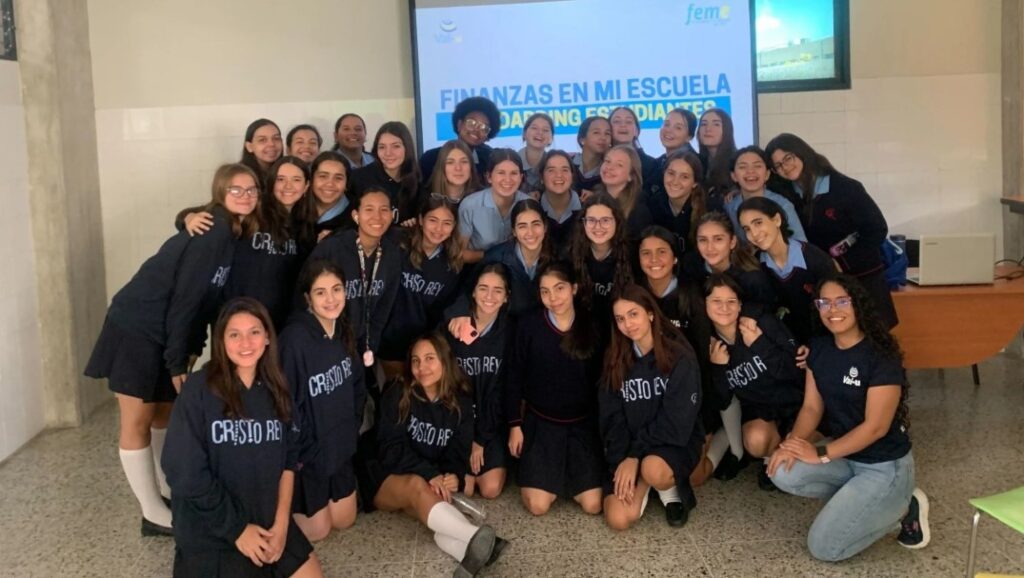
The educator said that among the educational institutions they have visited in Venezuela are: the Altamira School, in Maracaibo, Zulia state; Cristo Rey School, in Caracas; UE Colegio Las Fuentes, in Barquisimeto, Lara state; El Manglar Comprehensive School, in Barcelona, Anzoátegui state; La Inmaculada School, in La Guaira and UE Aldonza Manrique, in Porlamar, Nueva Esparta state.
In Mexico, they have been to Colegio Giocosa, in Mexico City and Colegio Unión de México, also in the capital of the Aztec country.
For Villalonga, The education provided seeks to ensure that children understand the advantages of decentralization. And he highlighted “the need to also understand that to send money to a person who is somewhere else, an intermediary bank is not needed, for example, or the data does not need to be exposed.”
A generation without fear of error
One of Villalonga’s most relevant observations is the ease with which minors assimilate these concepts. «Children, unlike adults, are not afraid of making mistakes and I think that is the valuable thing about what we do. Different from an adult who has a harder time, they are very sad, it is difficult for them to say ‘I don’t know’,” he commented.
In the opinion of the board, Venezuelan students are motivated by their own environment: «The boys have a completely different approach where they throw themselves into knowledge, they want to learn. “They know there is a need because they see their parents constantly fighting and talking about inflation.”
Val-U, which already has a presence in 10 cities in Venezuela such as Caracas, Valencia and Barquisimeto, seeks to close the current educational gap. Villalonga concluded with a reflection on the gap in the traditional system: “For a long time, education has been training people for this century, for the 21st century, but with skills and knowledge from the 20th century. What Val-U does is precisely prepare the kids of the 21st century with 21st century skills.”